Margaret Houghton Hepburn1,2
F, #8821, b. 17 May 1920, d. 20 February 2006
- Father*: Dr. Thomas Norval Hepburn M.D. b. 18 Dec 1879, d. 20 Nov 1962
- Mother*: Katharine Martha Houghton b. 2 Feb 1878, d. 17 Mar 1951
Family: Dr. Thomas Perry PhD b. 11 Sep 1913
- Marriage*: Margaret Houghton Hepburn married Dr. Thomas Perry PhD on Aug 4, 1941 at Elkton, MD, USA.7,4
- Divorce*: Margaret Houghton Hepburn and Dr. Thomas Perry PhD were divorced.8
- Thomas Hepburn Perry+ b. 19 Jun 1942, d. 10 May 1968
- Margaret Hepburn Perry+4 b. 19 Jun 1942
- Robert Gibbs Perry+4 b. 11 Feb 1950
- Scott Houghton Perry+4 b. 12 Apr 1952
- Lansford Wilder Perry+4 b. 29 Dec 1955
Citations
- [S57] Hepburn, Me, Stories of My Life, p. 10.
- [S814] Marshall L. McClanahan, Houghton, John & Beatrix - MLM;, M, p. 184 #8805.
- [S58] Leaming, Katharine Hepburn, p. 189.
- [S654] Electronic Web Site, , http://familytreemaker.genealogy.com, Descendants of ?Hepburn/Hepbron, Jan. 29, 2002.
- [S57] Hepburn, Me, Stories of My Life, 10.
- [S254] Anne Edwards, A Remarkable Woman A Biography of Katharine Hepburn, p. 171.
- [S254] Anne Edwards, A Remarkable Woman A Biography of Katharine Hepburn, p. 227.
- [S1251] A. Scott Berg, Kate Remembered, P. 54.
- [S235] U.S. Census, from Marcia Tracy, Jul 29, 2003.
Marion Houghton Hepburn1,2
F, #8822, b. 24 April 1918, d. 3 August 1986
- Father*: Dr. Thomas Norval Hepburn M.D. b. 18 Dec 1879, d. 20 Nov 1962
- Mother*: Katharine Martha Houghton b. 2 Feb 1878, d. 17 Mar 1951
Family: Ellsworth Strong Grant b. 1917, d. 6 Mar 2013
- Marriage*: Marion Houghton Hepburn married Ellsworth Strong Grant on Jun 12, 1939 at Hartford, Hartford Co., CT, USA.5,6
- John Bernard Grant+10 b. 22 Mar 1940
- Katharine Grant11 b. 10 Mar 1945
- Toby Grant12 b. 6 Oct 1950, d. 28 May 2010
Citations
- [S57] Hepburn, Me, Stories of My Life, p. 27.
- [S814] Marshall L. McClanahan, Houghton, John & Beatrix - MLM;, M, p. 184 #8803.
- [S58] Leaming, Katharine Hepburn, p. 183.
- [S254] Anne Edwards, A Remarkable Woman A Biography of Katharine Hepburn, p. 171.
- [S254] Anne Edwards, A Remarkable Woman A Biography of Katharine Hepburn, p. 170.
- [S814] Marshall L. McClanahan, Houghton, John & Beatrix - MLM;, M, p. 184.
- [S58] Leaming, Katharine Hepburn.
- [S57] Hepburn, Me, Stories of My Life, 10.
- [S1251] A. Scott Berg, Kate Remembered, P. 54.
- [S254] Anne Edwards, A Remarkable Woman A Biography of Katharine Hepburn, p. 234.
- [S935] Who's Who, 1958, p. 1560.
- [S415] E-mail from Marcia Tracy, Dec 25, 2003.
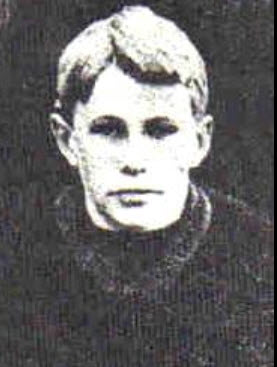
Thomas Houghton Hepburn1,2
M, #8823, b. 8 November 1905, d. 3 April 1921
- Father*: Dr. Thomas Norval Hepburn M.D. b. 18 Dec 1879, d. 20 Nov 1962
- Mother*: Katharine Martha Houghton b. 2 Feb 1878, d. 17 Mar 1951
Citations
- [S57] Hepburn, Me, Stories of My Life, p. 20.
- [S814] Marshall L. McClanahan, Houghton, John & Beatrix - MLM;, M, p. 183 #8801.
- [S58] Leaming, Katharine Hepburn, p. 123.
- [S58] Leaming, Katharine Hepburn, p. 189.
- [S95] Newspaper, New York Times Archives: Apr 4, 1921.
- [S58] Leaming, Katharine Hepburn, p. 203.
- [S254] Anne Edwards, A Remarkable Woman A Biography of Katharine Hepburn, p. 33.
Richard Houghton Hepburn1,2
M, #8824, b. 8 September 1911, d. 18 October 2000
- Father*: Dr. Thomas Norval Hepburn M.D. b. 18 Dec 1879, d. 20 Nov 1962
- Mother*: Katharine Martha Houghton b. 2 Feb 1878, d. 17 Mar 1951
Family 1: Estelle Morrison
- Marriage*: Richard Houghton Hepburn married Estelle Morrison on Oct 25, 1954.6,7
- Divorce*: Richard Houghton Hepburn and Estelle Morrison were divorced.
- Mundy Morrison Hepburn+7 b. 10 May 1955
- Tor Morrison Hepburn+ b. 5 Mar 1957
- Kuy Morrison Hepburn+7 b. 15 Jun 1959
- Aile Morrison Hepburn7 b. 15 Jun 1961
Family 2: Elizabeth Ballard
- Marriage*: Richard Houghton Hepburn married Elizabeth Ballard.6
- Divorce*: Richard Houghton Hepburn and Elizabeth Ballard were divorced.
Citations
- [S57] Hepburn, Me, Stories of My Life, p. 27.
- [S814] Marshall L. McClanahan, Houghton, John & Beatrix - MLM;, M, p. 183 #8802.
- [S58] Leaming, Katharine Hepburn, p. 145.
- [S814] Marshall L. McClanahan, Houghton, John & Beatrix - MLM;, M, p. 183.
- [S1251] A. Scott Berg, Kate Remembered, P. 54.
- [S58] Leaming, Katharine Hepburn.
- [S654] Electronic Web Site, , http://familytreemaker.genealogy.com, Descendants of ?Hepburn/Hepbron, Jan. 29, 2002.
- [S415] E-mail from Marcia Tracy, Jul 29, 2003.
- [S654] Electronic Web Site, , Hadley/ Houghton/ Olmsted Family Tree (Owner: Jane Preziosi; JPrez123): http://trees.ancestry.com/pt/person.aspx
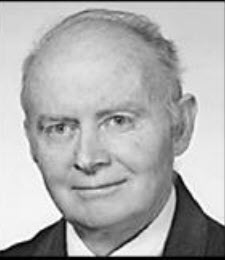
Dr. Robert Houghton Hepburn1,2
M, #8825, b. 4 April 1913, d. 26 November 2007
- Father*: Dr. Thomas Norval Hepburn M.D. b. 18 Dec 1879, d. 20 Nov 1962
- Mother*: Katharine Martha Houghton b. 2 Feb 1878, d. 17 Mar 1951
Family: Susanna Floyd b. 4 Oct 1919
- Marriage*: Dr. Robert Houghton Hepburn married Susanna Floyd on Jan 17, 1943.5,6
- David Powell Hepburn6 b. 24 Aug 1951
- Susanna Hepburn+6 b. 22 Jun 1954
Citations
- [S57] Hepburn, Me, Stories of My Life, p. 27.
- [S814] Marshall L. McClanahan, Houghton, John & Beatrix - MLM;, M, p. 184 #8804.
- [S58] Leaming, Katharine Hepburn, p. 156.
- [S1251] A. Scott Berg, Kate Remembered, P. 54.
- [S58] Leaming, Katharine Hepburn.
- [S654] Electronic Web Site, , http://familytreemaker.genealogy.com, Descendants of ?Hepburn/Hepbron, Jan. 29, 2002.
- [S93] Newspaper Obituary, Courant.Com.
- [S814] Marshall L. McClanahan, Houghton, John & Beatrix - MLM;, M, p. 184.
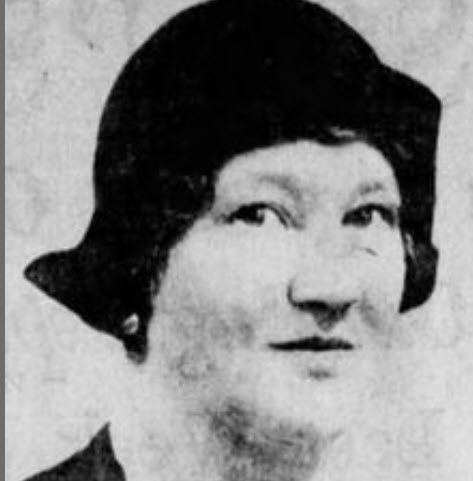
Marion Jeanette Houghton1,2
F, #8826, b. 22 November 1882, d. 2 October 1968
- Father*: Alfred Augustus Houghton3 b. 6 Mar 1851, d. 28 Oct 1892
- Mother*: Caroline Garlinghouse3 b. 13 May 1856, d. 2 Sep 1894
Family: Stevens Thompson Mason b. 3 Jul 1880, d. 1950
- Marriage*: Marion Jeanette Houghton married Stevens Thompson Mason on Aug 8, 1911 at Hartford, CT, USA.3
- Helen Houghton Mason+3 b. 11 Mar 1913
- Stevens T. Mason Jr3 b. 22 Aug 1915, d. 1937
- Adelaide Houghton Mason3 b. 19 Jan 1918
Citations
- [S1] Dr. John Wesley Houghton M.D., Houghton Genealogy of 1912, p. 498 #2709.
- [S814] Marshall L. McClanahan, Houghton, John & Beatrix - MLM;, M, p. 175 #8474.
- [S811] Unknown author Am. Biog. Libr.: Amer. Women, p. 364.
- [S1] Dr. John Wesley Houghton M.D., Houghton Genealogy of 1912, p. 498.
- [S57] Hepburn, Me, Stories of My Life, p. 10.
- [S814] Marshall L. McClanahan, Houghton, John & Beatrix - MLM;, M, p. 175.
- [S58] Leaming, Katharine Hepburn, p. 86.
- [S58] Leaming, Katharine Hepburn, p. 95.
- [S58] Leaming, Katharine Hepburn, p. 189.
- [S58] Leaming, Katharine Hepburn.
Edith Houghton1,2,3
F, #8827, b. 22 December 1879, d. 23 October 1948
- Father*: Alfred Augustus Houghton4 b. 6 Mar 1851, d. 28 Oct 1892
- Mother*: Caroline Garlinghouse b. 13 May 1856, d. 2 Sep 1894
Family: Dr. Donald Russell Hooker MD b. 7 Sep 1876, d. 1 Aug 1946
- Marriage*: Edith Houghton married Dr. Donald Russell Hooker MD on Jun 14, 1905 at Baltimore, Baltimore Co., MD, USA, Moser: Buffalo, NY.5,13,6,14,15
- Dr. Donald Houghton Hooker M.D.+ b. 18 Sep 1908, d. 31 Mar 1996
- Dr. Russell Houghton Hooker MD+20 b. 10 Oct 1911, d. 11 May 1984
- Edith Houghton Hooker+21 b. 9 May 1916
- Elizabeth Houghton Hooker+21 b. 9 May 1916
- Beatrice Houghton Hooker+21 b. 17 Nov 1918, d. 22 Jan 2007
Citations
- [S1] Dr. John Wesley Houghton M.D., Houghton Genealogy of 1912, p. 498 #2708.
- [S57] Hepburn, Me, Stories of My Life, p. 10.
- [S814] Marshall L. McClanahan, Houghton, John & Beatrix - MLM;, M, p. 175 #8473.
- [S235] U.S. Census, 1880 Soundex, Hamburgh, Erie Co., NY, Reel 72, Vol. 18, ED. 94, Sh. 19, Ln. 45.
- [S1] Dr. John Wesley Houghton M.D., Houghton Genealogy of 1912, p. 498.
- [S814] Marshall L. McClanahan, Houghton, John & Beatrix - MLM;, M, p. 175.
- [S235] U.S. Census, 1900 Soundex, Lower Merion Twp, Montgomery Co., PA, Reel 221, Vol. 139, E.D. 295, S. 3, Ln. 69.
- [S1519] Dr Margaret Houghton Hooker PhD, Then and Now : A Family History, p. 10.
- [S1230] 1900 U.S. Federal Census , Lower Merion, Montgomery Co., Pennsylvania; Roll:T623; Enumeration District: 295; Sheet: 3B; line 69.
- [S58] Leaming, Katharine Hepburn, p. 87.
- [S254] Anne Edwards, A Remarkable Woman A Biography of Katharine Hepburn, p. 28.
- [S1251] A. Scott Berg, Kate Remembered, P. 43.
- [S58] Leaming, Katharine Hepburn, p. 121.
- [S654] Electronic Web Site, , http://familytreemaker.genealogy.com/users/m/o/s/…
- [S1378] Thomas William Herringshaw, American Elite, p. 339.
- [S58] Leaming, Katharine Hepburn, p. 431.
- [S1519] Dr Margaret Houghton Hooker PhD, Then and Now : A Family History, p. 9.
- [S58] Leaming, Katharine Hepburn, p. 149.
- [S654] Electronic Web Site, , http://www.mdarchives.state.md.us/msa/educ/exhibits/…
- [S58] Leaming, Katharine Hepburn, p. 148.
- [S58] Leaming, Katharine Hepburn, p. 189.
Ellsworth Strong Grant1,2
M, #8828, b. 1917, d. 6 March 2013
Family 1: Marion Houghton Hepburn b. 24 Apr 1918, d. 3 Aug 1986
- Marriage*: Ellsworth Strong Grant married Marion Houghton Hepburn, daughter of Dr. Thomas Norval Hepburn M.D. and Katharine Martha Houghton, on Jun 12, 1939 at Hartford, Hartford Co., CT, USA.3,4
- John Bernard Grant+7 b. 22 Mar 1940
- Katharine Grant8 b. 10 Mar 1945
- Toby Grant9 b. 6 Oct 1950, d. 28 May 2010
Family 2: Virginia Tuttle b. c 1918, d. May 2012
- Marriage*: Ellsworth Strong Grant married Virginia Tuttle.5
Citations
- [S57] Hepburn, Me, Stories of My Life, p. 30.
- [S254] Anne Edwards, A Remarkable Woman A Biography of Katharine Hepburn, p. 171.
- [S254] Anne Edwards, A Remarkable Woman A Biography of Katharine Hepburn, p. 170.
- [S814] Marshall L. McClanahan, Houghton, John & Beatrix - MLM;, M, p. 184.
- [S415] E-mail from Marcia Tracy, Aug 7, 2004.
- [S93] Newspaper Obituary, http://www.legacy.com/obituaries/hartfordcourant/…
- [S254] Anne Edwards, A Remarkable Woman A Biography of Katharine Hepburn, p. 234.
- [S935] Who's Who, 1958, p. 1560.
- [S415] E-mail from Marcia Tracy, Dec 25, 2003.
Thomas Hepburn Perry1,2
M, #8829, b. 19 June 1942, d. 10 May 1968
- Father*: Dr. Thomas Perry PhD b. 11 Sep 1913
- Mother*: Margaret Houghton Hepburn b. 17 May 1920, d. 20 Feb 2006
Family: Sherry Ann Borough
- Marriage*: Thomas Hepburn Perry married Sherry Ann Borough on Jan 4, 1964.2
- Thomas More Perry2 b. 10 Aug 1967
Citations
- [S57] Hepburn, Me, Stories of My Life, p. 49.
- [S654] Electronic Web Site, , http://familytreemaker.genealogy.com, Descendants of ?Hepburn/Hepbron, Jan. 29, 2002.
Ludlow Ogden Smith1
M, #8830, b. circa 1899
Family: Katharine Houghton Hepburn b. 12 May 1907, d. 29 Jun 2003
- Marriage*: Ludlow Ogden Smith married Katharine Houghton Hepburn, daughter of Dr. Thomas Norval Hepburn M.D. and Katharine Martha Houghton, on Dec 12, 1928 at Hartford, Hartford Co., CT, USA, at her parent's home with Grandfather Sewell Hepburn officiating; Dec 6, 1928 marriage certif.3,2
- Divorce*: Ludlow Ogden Smith and Katharine Houghton Hepburn were divorced in 1934 at Yucatan, Mexico.5,2
Citations
- [S57] Hepburn, Me, Stories of My Life, p. 55.
- [S814] Marshall L. McClanahan, Houghton, John & Beatrix - MLM;, M, p. 183.
- [S58] Leaming, Katharine Hepburn, p. 528.
- [S1233] 1930 U.S. Federal Census , Manhattan, Dist. 275, New York, Reel 1559, p. 1A, ED 275, line 19, dwl 146.
- [S254] Anne Edwards, A Remarkable Woman A Biography of Katharine Hepburn, p. 126, 239.
Tor Morrison Hepburn1,2
M, #8831, b. 5 March 1957
- Father*: Richard Houghton Hepburn b. 8 Sep 1911, d. 18 Oct 2000
- Mother*: Estelle Morrison2
Family: Marita Dumlas
- Marriage*: Tor Morrison Hepburn married Marita Dumlas on Nov 17, 1988.2
- Matthew Hepburn2 b. 19 Jun 1992
Citations
- [S57] Hepburn, Me, Stories of My Life, p. 66.
- [S654] Electronic Web Site, , http://familytreemaker.genealogy.com, Descendants of ?Hepburn/Hepbron, Jan. 29, 2002.
Marita Dumlas1
F, #8832
Family: Tor Morrison Hepburn b. 5 Mar 1957
- Marriage*: Marita Dumlas married Tor Morrison Hepburn, son of Richard Houghton Hepburn and Estelle Morrison, on Nov 17, 1988.1
- Matthew Hepburn1 b. 19 Jun 1992
Citations
- [S654] Electronic Web Site, , http://familytreemaker.genealogy.com, Descendants of ?Hepburn/Hepbron, Jan. 29, 2002.
Hiram Robert Houghton1,2
M, #8833, b. 24 December 1851, d. 8 July 1936
- Father*: Edmund Houghton b. 11 Mar 1810, d. 6 Aug 1876
- Mother*: Mary Ann Hadley b. 7 Nov 1813, d. 23 May 1904
Family 2: Flora Louise Simmons b. 26 Aug 1858, d. 22 Dec 1912
- Marriage*: Hiram Robert Houghton married Flora Louise Simmons on Aug 26, 1878 w/2; mar 22 years in 1900 census.4,6,8
- Henry Nathan Houghton+15 b. 23 Sep 1879, d. 22 Feb 1963
- Hiram Woodbury Houghton+ b. 8 Sep 1881, d. 8 Sep 1968
- Flora Lysle Houghton b. 31 Oct 1883
- Edmund Bradley Houghton+ b. 4 Nov 1885, d. 4 Mar 1926
- Alicia Aspenwall Houghton+ b. 21 Sep 1887, d. 24 Oct 1974
- Leona Merle Houghton b. 29 Aug 1889, d. 6 Jul 1978
- Harlan Robert Houghton4 b. 13 Jul 1898, d. 5 Apr 1936
Citations
- [S1] Dr. John Wesley Houghton M.D., Houghton Genealogy of 1912, p. 386 #1127.
- [S814] Marshall L. McClanahan, Houghton, John & Beatrix - MLM;, M, p. 105 #4009, 150.
- [S1] Dr. John Wesley Houghton M.D., Houghton Genealogy of 1912, p. 386.
- [S235] U.S. Census, 1900 Soundex Massachusetts, Box 127, Vol. 89, E.D. 1648, Sh. 10, Ln. 40.
- [S235] U.S. Census, 1920 Soundex, Worcester Co., Mass., Box 129, Vol. 137, E.D. 96, Sh. 3, Ln. 91.
- [S814] Marshall L. McClanahan, Houghton, John & Beatrix - MLM;, M, p. 105, 150.
- [S814] Marshall L. McClanahan, Houghton, John & Beatrix - MLM;, M, p. 150.
- [S235] U.S. Census, 1880 Soundex, Lunenburg, Worcester Co., MA, Box 28, Vol. 33, ED 815, Sh 26, Ln 31.
- [S1229] 1880 U.S. Federal Census , Lunenburg, Worcester Co., MA, Box 28, Vol. 33, ED 815, Sh 26, Ln 31, dwl 234-248.
- [S1230] 1900 U.S. Federal Census , Lunenburg, Worcester Co., Massachusetts; Roll: T623 693; Enumeration District: 1648; Sheet 10A; line 40, dwl 211-219.
- [S1231] 1910 U.S. Federal Census , Lunenburg, Worcester, Massachusetts; Roll: T624_629; Page: 16B; Enumeration District: 1777;
line 79, dwl 274-295. - [S1232] 1920 U.S. Federal Census , Leominster Ward 1, Worcester, Massachusetts; Roll T625_747; Page: 3B; Enumeration District: 96; line 91, dwl 1233-79-80.
- [S1233] 1930 U.S. Federal Census , Leominster, Worcester, Massachusetts; Roll: T626_964; Enumeration District: 217; page 92; sheet 13A; line 9, dwl 19-138-296.
- [S36] Letter, 1967, from Lona Houghton to niece Harriet N. Houghton Snow.
- [S1074] Town Records: Haitland?, VT; VT Division of Records, Middlesex, VT, F-30766, VT Vital Records 1909-1941.
Spencer Bonaventure Tracy1,2
M, #8834, b. 4 April 1900, d. 10 June 1967
Family: Katharine Houghton Hepburn b. 12 May 1907, d. 29 Jun 2003
- Partner*: Spencer Bonaventure Tracy was the long term partner of Katharine Houghton Hepburn for 27 year relationship; never married because Tracy refused to divorce his Episcopalian wife, who cared for his deaf son and worked for the deaf between 1941 and 1967.3
Citations
- [S57] Hepburn, Me, Stories of My Life, p. 153.
- [S254] Anne Edwards, A Remarkable Woman A Biography of Katharine Hepburn, p. 190.
- [S1251] A. Scott Berg, Kate Remembered, P. 34.
- [S254] Anne Edwards, A Remarkable Woman A Biography of Katharine Hepburn, p. 348.
- [S254] Anne Edwards, A Remarkable Woman A Biography of Katharine Hepburn, p. 344.
- [S254] Anne Edwards, A Remarkable Woman A Biography of Katharine Hepburn, p. 189.
Rufus Houghton1
M, #8835, d. 1863
- Father*: Rufus Houghton b. 7 Jun 1791, d. 9 Sep 1865
- Mother*: Anna Nickerson b. 26 Sep 1799
Citations
- [S1] Dr. John Wesley Houghton M.D., Houghton Genealogy of 1912, p. 381 #1050.
- [S1] Dr. John Wesley Houghton M.D., Houghton Genealogy of 1912, p. 381.
Martha Houghton1
F, #8836, b. 4 August 1822, d. 12 July 1823
- Father*: Rufus Houghton b. 7 Jun 1791, d. 9 Sep 1865
- Mother*: Anna Nickerson b. 26 Sep 1799
Citations
- [S1] Dr. John Wesley Houghton M.D., Houghton Genealogy of 1912, p. 381 #1051.
- [S1] Dr. John Wesley Houghton M.D., Houghton Genealogy of 1912, p. 381.
Maria Houghton1
F, #8837, b. 12 February 1820
- Father*: Rufus Houghton b. 7 Jun 1791, d. 9 Sep 1865
- Mother*: Anna Nickerson b. 26 Sep 1799
Citations
- [S1] Dr. John Wesley Houghton M.D., Houghton Genealogy of 1912, p. 381 #1052.
- [S1] Dr. John Wesley Houghton M.D., Houghton Genealogy of 1912, p. 381.
Lewis Houghton1,2
M, #8838, b. 24 February 1827
- Father*: Rufus Houghton2 b. 7 Jun 1791, d. 9 Sep 1865
- Mother*: Anna Nickerson b. 26 Sep 1799
Citations
- [S1] Dr. John Wesley Houghton M.D., Houghton Genealogy of 1912, p. 381 #1053.
- [S1226] 1850 U.S. Federal Census , Otsego, Allegan, Michigan; Roll: M432_346; Page: 42/84; line 8, dwl 656-695.
- [S1] Dr. John Wesley Houghton M.D., Houghton Genealogy of 1912, p. 381.
- [S1227] 1860 U.S. Federal Census , Brookfield, LaSalle Co., IL, p. 317, line 39, dwl 3066-3077.
Elihu Houghton1,2
M, #8839, b. 28 December 1824
- Father*: Rufus Houghton3 b. 7 Jun 1791, d. 9 Sep 1865
- Mother*: Anna Nickerson3 b. 26 Sep 1799
Family: Joanna (?) d. b 1880
- Marriage*: Elihu Houghton married Joanna (?)3
- Anna Marie Houghton+3 b. bt 1858 - Jun 1864
- Isabella Houghton3 b. c 1862
- James Houghton3 b. c 1864
Citations
- [S1] Dr. John Wesley Houghton M.D., Houghton Genealogy of 1912, p. 381 #1054.
- [S235] U.S. Census, 1870 US Census, Rutland, LaSalle Co., IL, Reel 244, p. 683, line 4, dwl 42-39.
- [S1] Dr. John Wesley Houghton M.D., Houghton Genealogy of 1912, p. 381.
- [S1229] 1880 U.S. Federal Census , Ottawa, La Salle, Illinois; Roll: T9_223; Family History Film: 1254223; Page: 510B; Enumeration District: 81; Sheet 2, line 26, dwl 15-19.
- [S1228] 1870 U.S. Federal Census , Rutland, LaSalle Co., IL, Roll: M593_244, p. 683; sheet 5, line 4, dwl 42-39.
- [S1230] 1900 U.S. Federal Census , Manlius, LaSalle Co., Illinois; Roll: T623 ; Enumeration District: none; Sheet: 16B; line 87, dwl 601-286-285.
Edward Houghton1,2
M, #8840, b. 11 September 1832, d. 26 November 1879
- Father*: Rufus Houghton2 b. 7 Jun 1791, d. 9 Sep 1865
- Mother*: Lucy Abel2 b. 28 Dec 1808, d. 25 Aug 1890
Family: Martha Ramsey Sharpe b. 10 Sep 1846, d. 8 Jan 1915
- Marriage*: Edward Houghton married Martha Ramsey Sharpe on 1875 at Dallas, TX, USA.3
- Frances Henrietta Houghton b. 30 Aug 1876
Citations
- [S1] Dr. John Wesley Houghton M.D., Houghton Genealogy of 1912, p. 381 #1055.
- [S1226] 1850 U.S. Federal Census , Otsego, Allegan, Michigan; Roll: M432_346; Page: 42/84; line 8, dwl 656-695.
- [S1] Dr. John Wesley Houghton M.D., Houghton Genealogy of 1912, p. 381.
- [S28] DAR Lineage Book, 74: 53.
- [S1226] 1850 U.S. Federal Census , Bedford, Calhoun, Michigan; Roll: M432_348; Page: 95;
line 7, dwl 637-649. - [S1227] 1860 U.S. Federal Census , Precinct 2, Dallas, Texas; Roll: M653_1292; Page: 323; sheet 112, line 33, dwl 774-774.
- [S524] DFPA Lineage Book, 16 [1927]: 9.
Anna E. Houghton1,2,3,4
F, #8841, b. 16 October 1834
- Father*: Rufus Houghton4 b. 7 Jun 1791, d. 9 Sep 1865
- Mother*: Lucy Abel4 b. 28 Dec 1808, d. 25 Aug 1890
Family: E. H. Bryant b. c 1835, d. b 1911
- Marriage*: Anna E. Houghton married E. H. Bryant on Oct 16, 1874 at LaSalle Co., IL, USA, Lic. 564, Book E.3,5
Citations
- [S1] Dr. John Wesley Houghton M.D., Houghton Genealogy of 1912, p. 381 #1056.
- [S1229] 1880 U.S. Federal Census , Tiskilwa, Bureau, Illinois; Roll: T9_177; Family History Film: 1254177; Page: 137.3000; Enumeration District: 12; line 30, dwl 77-81.
- [S654] Electronic Web Site, , Illinois Statewide Marriage Index, 1763-1900: Houghton Surname search.
- [S1226] 1850 U.S. Federal Census , Otsego, Allegan, Michigan; Roll: M432_346; Page: 42/84; line 8, dwl 656-695.
- [S1] Dr. John Wesley Houghton M.D., Houghton Genealogy of 1912, p. 381.
- [S235] U.S. Census, 1870 US Census, Brookfield Twp, LaSalle Co., IL, Roll 243, p. 36, line 25, dwl 21-21.
- [S415] E-mail from Maggie Lee, June 5, 2000.
Olive H. Houghton1,2
F, #8842, b. 28 November 1836, d. 21 August 1865
- Father*: Rufus Houghton2 b. 7 Jun 1791, d. 9 Sep 1865
- Mother*: Lucy Abel2 b. 28 Dec 1808, d. 25 Aug 1890
Family: William C. Lapham d. 27 Dec 1863
- Marriage*: Olive H. Houghton married William C. Lapham.3
- Edward Lapham b. 1862, d. 26 Mar 1864
Citations
- [S1] Dr. John Wesley Houghton M.D., Houghton Genealogy of 1912, p. 381 #1057.
- [S1226] 1850 U.S. Federal Census , Otsego, Allegan, Michigan; Roll: M432_346; Page: 42/84; line 8, dwl 656-695.
- [S1] Dr. John Wesley Houghton M.D., Houghton Genealogy of 1912, p. 381.
Daniel Houghton1,2
M, #8843, b. 28 July 1839
- Father*: Rufus Houghton2 b. 7 Jun 1791, d. 9 Sep 1865
- Mother*: Lucy Abel2 b. 28 Dec 1808, d. 25 Aug 1890
Citations
- [S1] Dr. John Wesley Houghton M.D., Houghton Genealogy of 1912, p. 381 #1058.
- [S1226] 1850 U.S. Federal Census , Otsego, Allegan, Michigan; Roll: M432_346; Page: 42/84; line 8, dwl 656-695.
- [S1] Dr. John Wesley Houghton M.D., Houghton Genealogy of 1912, p. 381.
George Lampton Houghton1,2
M, #8844, b. 28 August 1841, d. 25 February 1917
- Father*: Rufus Houghton2 b. 7 Jun 1791, d. 9 Sep 1865
- Mother*: Lucy Abel2 b. 28 Dec 1808, d. 25 Aug 1890
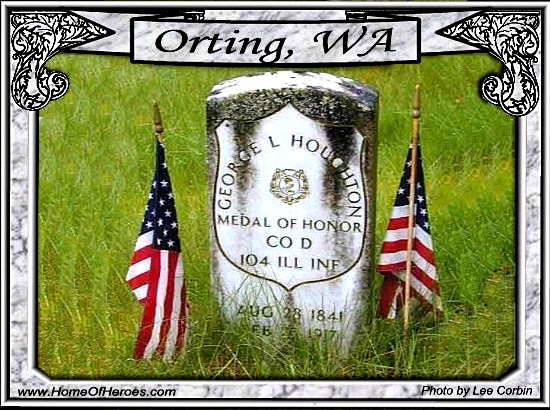
Family: Mrs. Emma L. Roberts b. Mar 1847
- Marriage*: George Lampton Houghton married Mrs. Emma L. Roberts on Jul 20, 1898 at Woodstock, MN, USA, mar 2 y in 1900 census; mar 9 y in 1910 census; her 2nd mar.4
Citations
- [S1] Dr. John Wesley Houghton M.D., Houghton Genealogy of 1912, p. 381 #1059.
- [S1226] 1850 U.S. Federal Census , Otsego, Allegan, Michigan; Roll: M432_346; Page: 42/84; line 8, dwl 656-695.
- [S1] Dr. John Wesley Houghton M.D., Houghton Genealogy of 1912, p. 381.
- [S415] E-mail from Maggie Lee, June 5, 2000.
- [S654] Electronic Web Site, , www.findagrave.com, Jul 2003.
- [S1231] 1910 U.S. Federal Census , Christopher, King, Washington; Roll: T624_1657; Page: 5A; Enumeration District: 23; line 24, dwl 121-121.
- [S415] E-mail http://www.army.mil/cmh-pg/mohciv.htm on Aug. 21, 2000.
- [S654] Electronic Web Site, , CivilWarData.Com, Civil War Research and Genealogy Database, Nov. 2001.
- [S882] Ancestry.Com, online www.ancestry.com, Civil War Service Records, Oct. 1, 2001.
- [S882] Ancestry.Com, online www.ancestry.com, American Civil War Soldiers database, Oct. 1, 2001.
- [S882] Ancestry.Com, online www.ancestry.com, Deadwood, Lawrence, South Dakota; Roll: 94; Page: 9; Enumeration District: 8.
- [S1515] Unknown name of person, unknown record type, unknown file number.
- [S654] Electronic Web Site, , http://interment.net/data/us/wa/pierce/soldiers%5Forting/…
- [S882] Ancestry.Com, online www.ancestry.com, Biography and Genealogy Master Index (BGMI): Houghton Surname.
Lydia T. Houghton1,2
F, #8845, b. 5 May 1844, d. 9 January 1880
- Father*: Rufus Houghton2 b. 7 Jun 1791, d. 9 Sep 1865
- Mother*: Lucy Abel2 b. 28 Dec 1808, d. 25 Aug 1890
Family: John Adams Cole d. 27 Dec 1885
- Marriage*: Lydia T. Houghton married John Adams Cole on Nov 17, 1861 at LaSalle Co., IL, USA, Book C, p. 1671.3,5
- George William Cole b. 22 May 1864
- Myrtle Cole+ b. 25 Apr 1868
- Edward Houghton Cole b. 27 Nov 1874
Citations
- [S1] Dr. John Wesley Houghton M.D., Houghton Genealogy of 1912, p. 382 #1060.
- [S1226] 1850 U.S. Federal Census , Otsego, Allegan, Michigan; Roll: M432_346; Page: 42/84; line 8, dwl 656-695.
- [S1] Dr. John Wesley Houghton M.D., Houghton Genealogy of 1912, p. 382.
- [S1227] 1860 U.S. Federal Census , Brookfield, LaSalle Co., IL, p. 319, line 1, dwl 3075-3077.
- [S654] Electronic Web Site, , Illinois Statewide Marriage Index, 1763-1900: Houghton Surname search.
Merritt Dana Houghton1,2,3
M, #8846, b. 31 May 1846, d. 1918
- Father*: Rufus Houghton3 b. 7 Jun 1791, d. 9 Sep 1865
- Mother*: Lucy Abel3 b. 28 Dec 1808, d. 25 Aug 1890
Family: Frances (?) b. May 1850
- Marriage*: Merritt Dana Houghton married Frances (?) on circa 1875 mar 25 years in 1900 census.6,7
- Charles Houghton6 b. c 1877
Citations
- [S1] Dr. John Wesley Houghton M.D., Houghton Genealogy of 1912, p. 382 #1061.
- [S882] Ancestry.Com, online www.ancestry.com, Biography and Genealogy Master Index (BGMI): Houghton Surname.
- [S1226] 1850 U.S. Federal Census , Otsego, Allegan, Michigan; Roll: M432_346; Page: 42/84; line 8, dwl 656-695.
- [S1] Dr. John Wesley Houghton M.D., Houghton Genealogy of 1912, p. 382.
- [S235] U.S. Census, 1870 US Census, Waltham, LaSalle Co., IL, Reel 244, p. 780B, line 35, dwl 80-79.
- [S1229] 1880 U.S. Federal Census , Rawlins, Carbon, Wyoming; Roll: T9_1454; Family History Film: 1255454; Page: 79C;.
- [S1230] 1900 U.S. Federal Census , Laramie, Ward 2, Albany Co., Wyoming; Roll: T623 ; Enumeration District: 8; Sheet: 11A, line 21, dwl 517-225-225.
- [S1231] 1910 U.S. Federal Census , Mead, Spokane, Washington; Roll: T624_1669; Page: 6A; Enumeration District: 134; line 18, dwl 118-119.
- [S415] E-mail from Maggie Lee, June 5, 2000.
Julia E. Houghton1,2
F, #8847, b. 12 December 1849
- Father*: Rufus Houghton2 b. 7 Jun 1791, d. 9 Sep 1865
- Mother*: Lucy Abel2 b. 28 Dec 1808, d. 25 Aug 1890
Family: Capt. William F. Dunn b. 21 Oct 1828
- Marriage*: Julia E. Houghton married Capt. William F. Dunn.3
- Harold Houghton Dunn b. 30 Oct 1884
Citations
- [S1] Dr. John Wesley Houghton M.D., Houghton Genealogy of 1912, p. 382 #1062.
- [S1226] 1850 U.S. Federal Census , Otsego, Allegan, Michigan; Roll: M432_346; Page: 42/84; line 8, dwl 656-695.
- [S1] Dr. John Wesley Houghton M.D., Houghton Genealogy of 1912, p. 382.
- [S235] U.S. Census, 1870 US Census, Waltham, LaSalle Co., IL, Reel 244, p. 781, line 36, dwl 87-86.
- [S1228] 1870 U.S. Federal Census , Waltham, LaSalle Co., IL, Reel 244, p. 781, line 36, dwl 87-86.
- [S415] E-mail from Maggie Lee, June 5, 2000.
John Wallace1
M, #8848
Family: Maria Houghton b. 12 Feb 1820
- Marriage*: John Wallace married Maria Houghton, daughter of Rufus Houghton and Anna Nickerson.2
Citations
- [S1] Dr. John Wesley Houghton M.D., Houghton Genealogy of 1912, p. 381 #1052s.
- [S1] Dr. John Wesley Houghton M.D., Houghton Genealogy of 1912, p. 381.
Alexander Wallace1
M, #8849
- Father*: John Wallace
- Mother*: Maria Houghton b. 12 Feb 1820
Citations
- [S1] Dr. John Wesley Houghton M.D., Houghton Genealogy of 1912, p. 381 #1052c.
- [S1] Dr. John Wesley Houghton M.D., Houghton Genealogy of 1912, p. 381.
Joanna (?)1
F, #8850, d. before 1880
Family: Elihu Houghton b. 28 Dec 1824
- Marriage*: Joanna (?) married Elihu Houghton, son of Rufus Houghton and Anna Nickerson.3
- Anna Marie Houghton+ b. bt 1858 - Jun 1864
- Isabella Houghton b. c 1862
- James Houghton b. c 1864
Citations
- [S1] Dr. John Wesley Houghton M.D., Houghton Genealogy of 1912, p. 381 #1054s.
- [S1229] 1880 U.S. Federal Census , Ottawa, La Salle, Illinois; Roll: T9_223; Family History Film: 1254223; Page: 510B; Enumeration District: 81; Sheet 2, line 26, dwl 15-19.
- [S1] Dr. John Wesley Houghton M.D., Houghton Genealogy of 1912, p. 381.