A Snelson DataBase and Index
Includes the Snelson Coat of Arms & Armory
Person Page 600
 |  |  |  |
Doris Booth
F, #14976, Deceased
Interactive Pedigree Button
Family: Joseph Caygill
| Daughter | Muriel Caygill (b. 21 December 1921, d. 25 October 2007) |
Main Events
| Also Known As | Doris Booth was also known as Doris Caygill. |
| Marriage | Doris Booth and Joseph Caygill were married. |
| User Reference Number | She; 17749 |
| Her daughter Muriel Caygill was born on 21 December 1921. |
Sir Sir Adam Bostock1,2
M, #14984, Deceased, b. about 1340, d. 1374
Interactive Pedigree Button
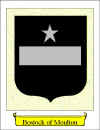
Person Exhibits - click on camera icons
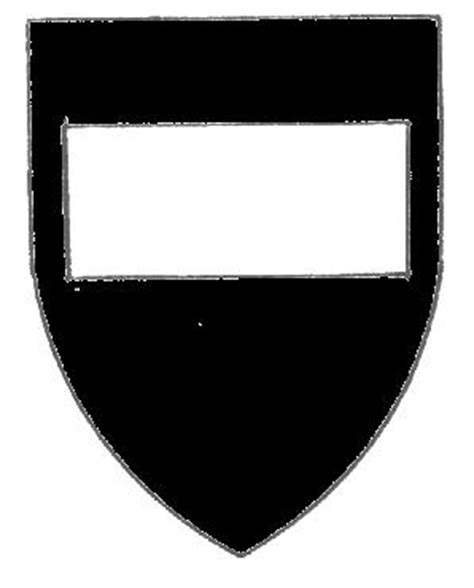
Bostock Arms
Parents
| Father | Sir Sir William Bostock (b. about 1305, d. 1372) |
| Mother | Alice Moulton (b. about 1312) |
Family: Margery Wettenhall (b. about 1314, d. 1370)
| Son | Thomas Bostock |
| Son | Sir Adam Bostock+ (b. about 1335, d. 1373) |
| Son | David Bostock+ (b. about 1375) |
Main Events
| Marriage | Sir Sir Adam Bostock and Margery Wettenhall were married.3,4,5 |
| User Reference Number | He; 6765 |
| Biography | This may be the Adam Bostock who, according to A.J. Bostock's "Chivalry of Cheshire" gave evidence in the Court of Chivalry, with John Holford, at Nantwich in 1386 and 1388 in the dispute regarding arms between Sir Richard Scrope and Sir Robert Grosvenor of Eaton. This may also be the same Adam who was granted a pardon for his services by the Black Prince presumably after Poitiers and the Treaty of Bordeaux. It may also be the same Adam who, according to the account in "The Chivalry of Cheshire" was the captain of the watch who guarded the King in 1398. In the same source, we read of the Adam who supported Richard through the Earl of Aumarle ( son of the Duke of York ) at Flint Castle maybe in 1399 after all of his army had deserted him. He was left with the "Men of the White Hart ". After being escorted to London, Richard was found to be unfit to govern, and he was replaced by the House of Lancaster. Adam may have been involved in the Cheshire Rebellion from 1399-1402 when Cheshire men who were participants were subjected to an order to confiscate their lands - which in fact never happened. The difficulty with all of this, is that there were so many Adam Bostocks, that the likelihood of my selecting the right one from this distance may be just as remote as the history. In 1364, he entered into a recognizance with David his brother, part of a fine of 40 pounds made with the Earl by Randle de Roter. Before he died, he may have acquired some lands in Bradewell. He was knighhted by the Black Prince in 1344 at the Battle of Najera in 1837. |
| His son Sir Adam Bostock was born about 1335. | |
| Birth | Sir Sir Adam Bostock was born about 1340.6 |
| Residence | He resided about 1350.7 |
| His wife Margery Wettenhall died in 1370. | |
| His father Sir Sir William Bostock died in 1372. | |
| His son Sir Adam Bostock died in 1373. | |
| Death | Sir Sir Adam Bostock died in 1374, at age ~34. |
| Probate | The estate of Sir Sir Adam Bostock was probated in 1374 [[Principal Role]] [[Witness Role: Deceased]].8 |
| His son David Bostock was born about 1375 in Churton, Cheshire, England. |
Citations
- [S609] A. J. BOSTOCK, The Chivalry of Cheshire
- [S1268] Harleian 1424 fo. 23b. Harleian 1505 fo. 21b
- [S1021] A Short History of the Bostock Family
- [S1023] The Visitation of Cheshire in the Year 1580
- [S1016] According to Otto Hirzell
- [S626] A. J. BOSTOCK, History of the Bostock Family
- [S522] Date estimated on 25 year generations
- [S629] Burke's Landed Gentry
Richard Rose
M, #14992, Deceased, b. about 1852, d. October 1921
Interactive Pedigree Button
Family: Anne Unknown (b. about 1852)
| Daughter | Alice A Rose (b. about 1874) |
| Daughter | Elizabeth C. Rose+ (b. 29 June 1877) |
| Son | Walter W Rose (b. about 1883) |
| Daughter | Edith M Rose (b. about 1885) |
| Son | Richard John Rose (b. about 1887) |
| Daughter | Margaret Anne Rose (b. about 1889) |
| Son | Henry Ruby Rose (b. about 1895) |
Main Events
| Marriage | Richard Rose and Anne Unknown were married. |
| User Reference Number | He; 25253 |
| Occupation | He was a Railway Foreman. |
| Birth | He was born about 1852 in Coventry, Warwickshire. |
| His daughter Alice A Rose was born about 1874. | |
| His daughter Elizabeth C. Rose was born on 29 June 1877. | |
| His son Walter W Rose was born about 1883. | |
| His daughter Edith M Rose was born about 1885. | |
| His son Richard John Rose was born about 1887. | |
| His daughter Margaret Anne Rose was born about 1889 in Birkenhead. | |
| His son Henry Ruby Rose was born about 1895 in Birkenhead. | |
| Death | Richard Rose died in October 1921, at age ~69, in Birkenhead. |
William Henry Snelson1
M, #14993, Deceased, b. about 1833, d. 30 November 1877
Interactive Pedigree Button
Parents
| Father | John Snelson (b. 19 February 1809, d. 23 June 1861) |
| Mother | Mary Massey (b. about 1805, d. 10 September 1874) |
Family: Sarah Ann Bailey (b. about 1840, d. 23 April 1914)
| Daughter | Annie Elizabeth Snelson (b. 29 December 1859) |
| Daughter | Mary Jane Snelson (b. 31 August 1862) |
| Daughter | Sara Ellen Snelson (b. about 1864) |
| Son | James Snelson (b. about 1866) |
| Son | William Henry Snelson (b. about 1868, d. about 1940) |
| Son | Charles Frederick Snelson (b. about 1872) |
| Daughter | Jessie Maria Snelson (b. about 1875, d. 1937) |
| Last Edited | 8 February 2026 |
Main Events
| Reference Number | William Henry Snelson had reference number 914. |
| User Reference Number | He; 914 |
| Residence | He resided in Brook_House Farm, Old Withington, Cheshire. |
| Occupation | He was a farmer. |
| Biography | See notes. |
| Cause of Death | The cause of death was an accident at night. |
| Note | Event Memos from GEDCOM Import... Biography His great grandson Peter John Snelson of Queen's Park, Handbridge, Chester records that his father told him that William alighted from the wrong side of a train when he was pissed, and was killed by a passing-through train at Biddulph Junction On 10th November 1877 an article appeared in the Macclesfield Courier reporting "The Shocking Death of a Cheshire Farmer" A verdict of accidental death was recorded by the Coroner, Mr Dunstan at the inquiry held at the Railway Hotel. Evidently the deceased probably had travelled by the Biddulph train and got off at the Junction, trespassing on the line, where he unfortunately met his death by accident. This is not entirely consistent with the evidence reported in the Macclesfield Courier which was presented to the Coroner. Assuming that there was only one William Snelson killed by a train on this spot at this time, then my interpretation of the inquiry evidence is as follows. William was on seen on Congleton Station; an express train came through; probably, William got on board the Biddulph train and alighted at the Junction illegally when that train stopped to be shunted. The shunting was necessary as Biddulph is south east of the junction which is north of Congleton. About 1 mile north of Congleton Station, I can see that the line crosses the Macclesfield Canal. Some 100 yards to the south is the road to Brook House Farm, which is only about 200 yards away. William may have had a few bevvies too many, in spite of what the Coroner said. So, I think that William was killed by the Stafford to Macclesfield (and on to Manchester train) having alighted illegally at Biddulph Junction on his way home to Brook House farm, perhaps in a drunken stupour from the alehouse, after celebrating a day at the markets. In fact, he wasn't in my opinion going home at all. I think he was on his way to stay with his brother-in-law. All of this is quite easy to summise from a modern Ordnance Survey map which clearly shows the Biddulph Junction and the now dismantled railway which goes south-east from a point just north of Congleton to Biddulph. William I believe, had caught the train to Biddulph which went north from Congleton to the Junction where the train was shunted onto the other line to Biddulph. When the train stopped to be shunted, he must have got off illegally, as there was no station there; but it is within 200 yards of Brook House Farm - I can see it on the map ! At least, that is my reconstruction of how William came to nut the evening Manchester train from Stafford. What amazes me is the evidence given by Inspector Harris presumably reporting what I think must have been said to him by the train driver Briggs : " Not a minute elapsed from the time we first saw the man to the period we lost sight of him ". Does this mean that the driver and his fireman had William in their sights so to speak for a full minute and STILL HIT HIM ! Had he been on the bottle or not, the evidence is very strange isn't it ? Everyone seems to be tripping over themselves to explain that (1) " There was not the least smell of drink " and (2) " He could not tell whether he was under the influence of drink or not " and again (3) " There was no evidence to show that the deceased was intoxicated ". All very strange. Nevertheless, it is still a tragic, unfortunate and very sad story. He left an estate of about 800 pounds in his will. [:CR:]. |
| Birth | He was born about 1833 in Withington.2 |
| Marriage | William Henry Snelson and Sarah Ann Bailey were married in December 1856 in Macclesfield.2 |
| His daughter Annie Elizabeth Snelson was born on 29 December 1859 in Old Withington. | |
| His father John Snelson died on 23 June 1861 in Kermincham, Near Congleton. | |
| His daughter Mary Jane Snelson was born on 31 August 1862 in Old Withington. | |
| His daughter Sara Ellen Snelson was born about 1864 in Old Withington. | |
| His son James Snelson was born about 1866 in Withington. | |
| His son William Henry Snelson was born about 1868. | |
| His son Charles Frederick Snelson was born about 1872 in Withington. | |
| His mother Mary Massey died on 10 September 1874 in Kermincham, Cheshire. | |
| His daughter Jessie Maria Snelson was born about 1875 in Old Withington, Cheshire. | |
| Burial | William Henry's remains were buried in November 1877 in Grave 37, St. John the Evangelist, Chelford, [[Principal Role]] [[Witness Role: Buried]]. |
| Death | He died on 30 November 1877, at age ~44, in Congleton Address: Biddulph Junction He was killed by a train right near Brooke House Farm, Biddulph Junction, on his way home from the pub.3 |
| Probate | The estate of William Henry Snelson was probated on 19 October 1878 in Chester [[Principal Role]] [[Witness Role: Deceased]].4 |
| His wife Sarah Ann Bailey died on 23 April 1914 in Duke's Oak, Brereton, Cheshire. |
Census
| Label and Year | Manual |
|---|---|
| Census 1851 | William Henry Snelson Id #14,993 (Principal) was at home on Census night 1851 at Kermincham; Witness Role: Son
Original Documents, Source and Citations here5  |
Citations
Diann Violet Mart
F, #14999, Living
Interactive Pedigree Button
Family: Charles Henry Fox (b. 14 February 1926, d. 20 March 1984)
| Relationship | Partner of Charles Henry Fox (4th cousin of Adrian John Snelson) |