A Snelson DataBase and Index
Includes the Snelson Coat of Arms & Armory
Person Page 272
 |  |  |  |
Sweyn I Forkbeard Unknown1
M, #6778, Deceased, b. 960, d. 1014
Interactive Pedigree Button
Family: Sigrid the Haughty Unknown (b. 968, d. 1014)
Main Events
| Marriage | Sweyn I Forkbeard Unknown and Sigrid the Haughty Unknown were married.1 |
| User Reference Number | He; 19413 |
| Residence | He resided See notes.1 |
| Note | Event Memos from GEDCOM Import... Residence Sweyn I Forkbeard, in the Anglo-Saxon Chronicles , in English Sven the Dane, also known as Swegen and Tuck, (Old Norse : Sveinn Tjúguskegg, Norwegian : Svein Tjugeskjegg, Swedish : Sven Tveskägg; Danish : Svend Tveskæg, originally Tjugeskæg or Tyvskæg), (c. 960 – February 3 , 1014 ), was king of Denmark and England, as well as parts of Norway. He was a Viking leader and the father of Canute the Great . On his father Harald Bluetooth 's death in late 986 or early 987, he became King of Denmark ; in 1000 , with allegiance of the Trondejarl, Erik of Lade , he was ruler over most of Norway. After a long effort at conquest, and shortly before his death, in 1013 he became King of England . For the last months of his life, he was the Danish sovereign of a North Sea empire, which only his son Cnut was to rival in northern Europe. Contents [hide [edit ] Forkbeard's Cognomen Sweyn Forkbeard's nickname, which was probably used during his lifetime, unlike many royal nicknames, refers to a pitchfork-style moustache which was fashionable at the time, particularly in England, where Sweyn may have picked up the idea. Similar type moustaches can be seen depicted on the Bayeux Tapestry .[citation needed ] [edit ] The Church and Currency One of Sweyn's coins. The inscription reads, 'ZVEN REX DAENOR', which translates as, 'Sweyn, king of Danes' On the northern edges of the relatively recent domain known as the Holy Roman Empire , with its roots in Charlemagne 's conquests hundreds of years prior to Sweyn's time, Sweyn Forkbeard had coins made with an image in his likeness. The Latin inscription on the coins produced read, 'ZVEN REX DAENOR', which translates as, 'Sweyn, king of Danes'.[2] Sweyn's father, Harald Bluetooth , was the first of the Scandinavian kings to officially accept Christianity , in the early or mid-960s. According to Adam of Bremen , an 11th century historian, Harald's son Sweyn was baptised Otto, paying tribute to the German king Otto I [3] who was the first Holy Roman Emperor . Forkbeard is never known to have officially made use of this Christian name though. He did not use it on the coins he proudly sent forth, and when he was given the English crown by the Witenagemot of Anglo-Saxon nobles, in 1013, he took the crown as king Sweyn[citation needed ]. [edit ] Life and Legacy Many details about Sweyn’s life are contested. There is an ongoing dispute among scholars over the extent of trust historians may place in the various, too often contradictory, accounts of his life given in the sources from his era of history, such as the Anglo-Saxon Chronicle , Adam of Bremen's Gesta Hammaburgensis Ecclesiae Pontificum , and the Heimskringla , a 13th century work by Icelandic author Snorri Sturluson .[4] Contrary accounts of Sweyn's later life also appear in the Encomium Emmae , an 11th century Latin encomium in honour of his son king Cnut's queen Emma , of Normandy , along with Chronicle of World and English History by Florence of Worcester , another 11th century author. The Battle of Svolder. Painting by Otto Sinding (1842-1909). The map shows the division of Norway after the Battle of Svolder according to Heimskringla . Eirik Hákonarson ruled the purple area as a fiefdom from, Sweyn Forkbeard. The yellow area was, under Sveinn Hákonarson , his half-brother, held as a fief of Olof Skötkonung , the Swedish king. The red area was under direct Danish control, with Sweyn ruling it as a Danish extension. Some historians, such as Lauritz Weibull , have argued that Sweyn’s wife described in the sagas - Swedish dowager queen Sigrid the Haughty - is purely fictional, whereas others have accepted her existence on the evidence of the Norse sagas . Weibull's conclusion is shared by Den Store Danske Encyklopædi which identifies the queen as Gunhild.[1] In some of the old sources, such as the JómsvÃkinga saga , Sweyn appears as an illegitimate son of Harald Bluetooth , raised by the legendary Jomsviking and jarl of Jomsborg , Palnatoke . Sweyn is also depicted as a rebellious son, who lead an uprising against his father, in 987 , and chased him out of the court, forcing him to abandon his kingdom. Harald apparently spent the rest of his days with the Slavs , in Wendland ,[5] within modern-day Germany. Many negative accounts build on Adam of Bremen's writings; Adam is said to have watched Sweyn and Scandinavia in general with an 'unsympathetic and intolerant eye' according to some scholars.[6] Adam accused Forkbeard of being a rebellious pagan who persecuted Christians, betrayed his father and expelled German bishops from Scania and Zealand . According to Adam, Sweyn was therefore sent into exile by his father's German friends and deposed in favor of king Eric the Victorious of Sweden , whom Adam wrote ruled Denmark until his death in 994 or 995. Historians generally have found problems with these claims Adam made, such as that Sweyn was driven into exile in Scotland for a period as long as fourteen years. As many scholars point out, he built churches in Denmark throughout this period, such as Lund and Roskilde , while he led Danish raids against England too.[7] [edit ] Ruler of England According to the chronicles of John of Wallingford , Sweyn was involved in raids against England during 1002-1005, 1006-1007, and 1009-1012, to revenge the St. Brice's Day massacre of England's Danish inhabitants in November 1002, a massacre often seen as large-scale ethnic cleansing of the Danes in England orchestrated by Ethelred the Unready . Sweyn is thought to have had a personal interest in these raids due to his sister, Gunhilde , being amongst the victims, according to Mike Ashley, in British Monarchs: 'Probably his [Ethelred's] worst decision was the St. Brice's day massacre on 13 November 1002 ...he ordered the killing of every Dane who lived in England, except the Anglo-Danes in the Danelaw. The massacre brought back to English shores the Danish commander Swein, whose sister and brother-in-law had been killed in the massacre'.[8] According to Michael Lapidge, in 'Swein Forkbeard' (The Blackwell Encyclopaedia of Anglo-Saxon England), Sweyn was active in Wessex and East Anglia in 1003-1004, but a 1005 famine forced him to return home.[9] Sweyn and the Jomsvikings at the funeral ale of his father Harald Blatand Some scholars have argued that Sweyn's participation may have been prompted by his state of impoverishment, after having been forced to pay a hefty ransom, and that he was in need of the income from the raids.[7] He acquired massive sums of Danegeld through the raids, and in 1013, he is reported to have personally led his forces in a full-scale invasion.[10] The contemporary Peterborough Chronicle (also called the Laud Manuscript), one of the Anglo-Saxon Chronicles, states that 'before the month of August came king Sweyn with his fleet to Sandwich . He went very quickly about East Anglia into the Humber 's mouth, and so upward along the Trent till he came to Gainsborough . Earl Uchtred and all Northumbria quickly bowed to him, as did all the people of Lindsey , then the people of the Five Boroughs . He was given hostages from each shire . When he understood that all the people had submitted to him, he bade that his force should be provisioned and horsed; he went south with the main part of the invasion force, while some of the invasion force, as well as the hostages, were with his son Canute. After he came over Watling Street , they went to Oxford , and the town-dwellers soon bowed to him, and gave hostages. From there they went to Winchester , and the people did the same, then eastward to London .'[11] But the Londoners are said to have destroyed the bridges that spanned the river Thames ('London Bridge is falling down '), and Sweyn suffered heavy losses and had to withdraw. The chronicles tells that 'king Sweyn went from there to Wallingford , over the Thames to Bath , and stayed there with his troops; Ealdorman Aethelmaer came, and the western Thegns with him. They all bowed to Sweyn and gave hostages.' London had withstood the assault of the Danish army, but the city was now alone, isolated within a country which had completely surrendered. Sweyn Forkbeard was accepted as King of England following the flight to Normandy of King Ethelred the Unready in late 1013. With the acceptance of the Witan, London had finally surrendered to him, and he was declared king on Christmas day. Sweyn was based in Gainsborough , Lincolnshire , and began to organize his vast new kingdom, but he died there on February 3 , 1014 , having ruled England unopposed for only five weeks. His embalmed body was subsequently returned to Denmark, to be buried in the church he built in Roskilde.[12] He was succeeded as King of Denmark by his elder son, Harald II , but the Danish fleet proclaimed his younger son Canute king. In England, the councillors had sent for Æthelred, who upon his return from exile in Normandy in the spring of 1014 managed to drive Canute out of England. However, Canute returned to become King of England in 1016, while also ruling Denmark, Norway, parts of Sweden, Pomerania , and Schleswig . [edit ] Religion Adam of Bremen's writings regarding Sweyn and his father may have been compromised by Adam's desire to emphasize Sweyn's father, Harald, as a candidate for sainthood , and he claims that Sweyn, who was baptized along with his father, was a heathen . This may have been true, as much of Scandinavia was pagan at the time, though there is no data to corroborate the assertion. German and French records support that Harald Bluetooth was baptized. According to Adam, Sweyn was punished by God for supposedly leading the uprising which led to king Harald's death, and had to spend 'fourteen years' abroad - perhaps a Biblical reference from an ecclesiastical writer. Adam purports that Sweyn was shunned by all those with whom he sought refuge, but was finally allowed to live for a while in Scotland . The Scottish king at the time was apparently known in Europe as a heathen and a murderer, and Adam's intention is obviously to show that Sweyn belonged with heathens and murderers and was not fit to rule a Christian country. He only achieves success as a ruler once he accepts Christ as his saviour. Sweyn was tolerant of paganism while favoring Christianity, at least politically. By allowing English ecclesiastical influence in his kingdom, he was purposely spurning the Hamburg-Bremen archbishop, and since German bishops were an integral part of the secular state, Sweyn's preference for the English church may thus have been a political move to preempt any threat against his independence posed by the German kings.[13] However, contrary to Adam's writings, he does not appear to have reestablished paganism; there is no evidence of a reversion to pagan burial practices during Sweyn's reign.[14] Whether King Sweyn was a heathen or not, he did enlist priests and bishops from England rather than from Hamburg [13] and this may have given Adam of Bremen further cause to dislike him. It also may have been because there were ample converted priests of a Danish origin from the Danelaw in England, while Sweyn really had few connections to Germany or its priests. Sweyn must have known that once the Archbishop of Hamburg-Bremen gained influence in Denmark, the German Emperor Otto II would not be far behind; his Slavic neighbours to the south-east had all but been under an annex of Germany once Otto's father Otto I had divided their lands into Bishoprics and put them under the 'care' of the Holy Roman emperor . Sweyn may have envisaged the same happening to his own territory. |
| Birth | He was born in 960.1 |
| Death | He died in 1014, at age ~54.1 |
| His wife Sigrid the Haughty Unknown died in 1014. |
Citations
- [S1016] According to Otto Hirzell
Margaret Jackson
F, #6779, Deceased, b. 1805, d. 3 April 1855
Interactive Pedigree Button
Person Exhibits - click on camera icons
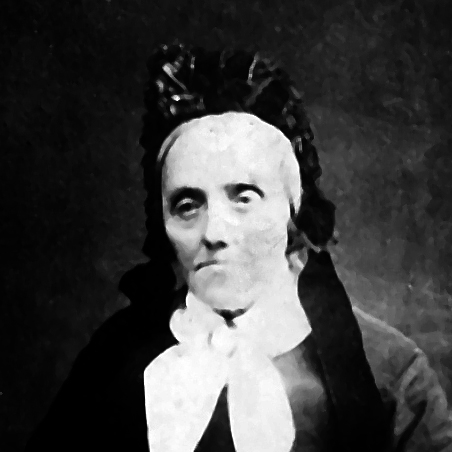
Margaret Roby 1805-1855
Family: Roger Roby (b. 24 April 1807, d. 20 October 1886)
| Son | William Roby+ (b. 1827) |
| Son | Henry Roby (b. about 1832) |
| Daughter | Margaret Jane Roby (b. about 1833) |
| Son | Nathan Roby (b. 1837) |
| Son | Samuel Roby (b. about 1839) |
Main Events
| User Reference Number | Margaret Jackson; 24565 |
| Birth | She was born in 1805 in Prescot. |
| Marriage | Margaret Jackson and Roger Roby were married on 17 December 1826 in St. Mary the Virgin, Prescot, England, Marriage: 17 Dec 1826 St Mary the Virgin, Prestwich, Lancashire, England Roger Roby - (X), Outwood Margaret Jackson - (X), Outwood Witness: George Kay; Abrm. Kay Married by Banns by: Philip Wharton Register: Marriages 1826 - 1828, Page 416. |
| Her son William Roby was born in 1827 in Outwood, Lancashire, England. | |
| Her son Henry Roby was born about 1832 in Outwood, Lancashire, England. | |
| Her daughter Margaret Jane Roby was born about 1833 in Outwood, Lancashire, England. | |
| Her son Nathan Roby was born in 1837 in Outwood, Lancashire, England. | |
| Her son Samuel Roby was born about 1839 in Outwood, Lancashire, England. | |
| Death | Margaret Jackson died on 3 April 1855, at age ~50, Gravestone reads ""Resteth The Body Of Roger Roby Of Kearsley. Who Departed This Life October 20th 1886 In His 80th Year. Also Margaret The Wife Of Roger Roby Of Kearsley. Who Departed This Life April 3rd 1855 Aged 50 Years. Also Betty Roby Who Departed This Life July 29th 1855 Aged 86 Years. Also Mary Second Wife of Roger Roby. Who Departed This Life May 27th 1884 In Her 76th Year." |
| Her husband Roger Roby died on 20 October 1886 in Ringley, Near Bolton, Lancashire, England. |
Census
| Label and Year | Manual |
|---|---|
| Census 1851 | Margaret Jackson Id #6,779 (Principal) was at home on Census night 1851 at Kersley, Bolton, Lancashire, England; Address: Blackhurst Green Witness Role: wife Original Documents, Source and Citations here |
| Census 1851 | Margaret Jackson Id #6,779 (Principal) was at home on Census night 1851 at Kersley, Bolton, Lancashire, England; Address: Blackhurst Green [[Witness Role: Wife]] Original Documents, Source and Citations here  |
Margaret De Somery1
F, #6788, Deceased, b. about 1225, d. after 18 June 1293
Interactive Pedigree Button
Family: Ralph Basset (b. 1215, d. 4 August 1265)
| Son | Ralph Basset+ (b. before 1224, d. 31 December 1299) |
Main Events
| Also Known As | Margaret De Somery was also known as Margaret Basset. |
| Birth | She was born Person Source, Y.2 |
| Marriage | Margaret De Somery and Ralph Basset were married.1 |
| User Reference Number | She; 19288 |
| Her son Ralph Basset was born before 1224. | |
| Birth | She was born about 1225.1 |
| Her husband Ralph Basset died on 4 August 1265. | |
| Death | She died after 18 June 1293.1 |
Citations
Thomas Gough
M, #6790, Deceased, b. about 1813
Interactive Pedigree Button
Family: Henrietta Page (b. about 1821)
| Son | John Gough+ (b. 20 September 1856, d. 17 April 1898) |
| Daughter | Heather Gough (b. about 1860) |
| Daughter | Esther Gough (b. about 1862) |
| Relationship | 2nd great-grandfather of Georgina Elizabeth Slee (partner of Adrian John Snelson) |
Main Events
| User Reference Number | Thomas Gough; 128 |
| Birth | He was born about 1813 in Tipton. |
| Marriage | Thomas Gough and Henrietta Page were married in June 1839 in Wolverhampton. |
| His son John Gough was born on 20 September 1856 in Tipton, Staffordshire. | |
| His daughter Heather Gough was born about 1860 in Tipton, Staffordshire. | |
| His daughter Esther Gough was born about 1862 in Tipton, Staffordshire. | |
| Occupation | Thomas Gough was an iron puddler in 1881. |
Census
| Label and Year | Manual |
|---|---|
| Census 1881 | Thomas Gough Id #6,790 (Principal) was at home on Census night 1881 at Haywoods Park, Bradfield, Yorkshre; Principal Role Witness Role: Head of Household Original Documents, Source and Citations here |
Maud la Zouche1,2
F, #6798, Deceased, b. about 1289, d. 31 May 1349
Interactive Pedigree Button
Parents
| Father | Alan la Zouche (b. 9 October 1267, d. 25 March 1314) |
| Mother | Eleanor Segrave (b. 1270, d. 1314) |
Family: Robert de Holand, III (b. 1270, d. 7 October 1328)
| Daughter | Maud de Holand+ (b. about 1311) |
Main Events
| Also Known As | Maud la Zouche was also known as Maud de Holand. |
| Birth | She was born Person Source, Y.3 |
| User Reference Number | She; 19163 |
| Birth | She was born about 1289.1 |
| Marriage | Maud la Zouche and Robert de Holand, III, were married in 1308.2,1 |
| Her daughter Maud de Holand was born about 1311. | |
| Her mother Eleanor Segrave died in 1314. | |
| Her father Alan la Zouche died on 25 March 1314. | |
| Her husband Robert de Holand, III, died on 7 October 1328. | |
| Death | Maud la Zouche died on 31 May 1349, at age ~60.1 |
Citations
William Snelson1
M, #6800, Deceased, b. about March 1776, d. 20 June 1833
Interactive Pedigree Button
Parents
| Father | John Snelson (b. April 1748, d. 20 January 1800) |
| Mother | Elizabeth Crooks (b. October 1748, d. 19 April 1822) |
Family: Elizabeth Fairbrother (b. April 1785, d. 29 January 1846)
| Son | John Snelson+ (b. about 24 December 1809) |
| Son | Thomas Snelson+ (b. January 1812, d. 17 January 1897) |
| Daughter | Margaret Snelson (b. 1813) |
| Son | Samuel Snelson+ (b. about April 1814, d. 27 October 1860) |
| Daughter | Hannah Snelson (b. December 1816) |
| Son | William Snelson+ (b. 24 October 1819, d. 28 October 1855) |
| Son | Edward Snelson+ (b. 1 January 1822, d. 8 January 1876) |
| Daughter | Elizabeth Snelson (b. 27 February 1825, d. 25 August 1890) |
| Relationship | 3rd great-grandfather of Adrian John Snelson |
| Person References | Anne Davies c 1919 - Descendents of William Snelson c.1670 Family Tree Blood Line My Family Tree Sarah Davies 1721 - 1761 Thomas Crooks c1717 - aft 1757 Thomas Edwards c1645 - aft 1690 William Snelston bef 1668 - aft 1707 |
| Last Edited | 11 June 2025 |
Main Events
| User Reference Number | William Snelson; 1 |
| Biography | Let's call him "William of Dodleston". Dodleston is situated about three kilometers North of Rossett and the same distance south of Lache to the West of the main A483 road and just inside the Cheshire border. The township of Higher Kinnerton is in Wales ( Flintshire ) but it is a chapelry of Dodleston ( which is in England ! ). Richard, Barry and Gareth found Williams grave under a moss carpet at the foot of John of Lache's grave. As Richard says, it is the furthest grave from the church. Funnily enough, the same thought crossed Richard's mind as crossed mine .... is there a message here ! This was the grave of William (1819) and Margaret his wife, the link between Richard's family and my own. I feel particularly pleased that they were able to find it. Just reading back through Richard's vivid description of the discovery was really quite exciting - not quite perhaps up to the opening of Tutankhamun's tomb or the latest Indiana Jones movie - but still, we only got a spot near the gate ! What do you expect, gold bars ? William SNELSON was born circa 1776 and married Elizabeth FAIBROTHER. He was a farmer and labourer ( at the time of his son ( Samuel )'s christening ( St. Mary's baptisms p20/2/1, 20N Mf 98/2 ) and lived at Eccleston Lane ( according to Jonathan Gill's Will ). He was made free on 30th March 1810 and is mentioned as the reference for the admittance as free men by right of birth for grandsons George Snelson ( christened 1851 and admitted 1872 ), William Snelson ( 1849-1900 - admitted 1872 ), Henry Snelson ( 1854-1901 - admitted 1877 ), Samuel Snelson ( 1849-1909 admitted 1877 ), Robert Snelson 1867-1934 - admitted 1910 and William Egerton Snelson ( admitted 1886 ); great grandsons William ( born 1874 - admitted 1895 ), William Egerton Snelson's son Leonard ( admitted 1912 ) and Robert's son William ( admitted 1910 ); and last but not least, great-great grandson Roger Snelson ( admitted 1961 ). Membership of one of the city companies entitled a person to apply for full citizenship or Freedom of the City. Applications were usually made within a few weeks of a person's being made free of a company - after completion of apprenticeship and becoming a master tradesman. We believe that there is an error in the Freemen records, and that Robert was the son not the grandson of William Snelson made free 1839. This seems to make more sense doesn't it ?2 |
| Occupation | He was a Farmer. |
| Birth | He was born about March 1776 in Dodleston, Cheshire, England, Dodleston is near Gresford.3 |
| Christening | William was christened on 31 March 1776 in Dodleston.4 |
| His father John Snelson died on 20 January 1800 in Lache, Chester, England. | |
| Marriage | William Snelson and Elizabeth Fairbrother were married on 29 December 1808 in Chester Address: St. John the Baptist.5 |
| Occupation | He was a farmer and labourer in Chester in December 1809.6 |
| His son John Snelson was born about 24 December 1809 in Chester. | |
| Freeman | William Snelson was made a Freeman of the City in Handbridge, Chester, on 30 March 1810 in Assembly as a farmer.7 |
| Residence | He resided in Eaton Road, Chester, on 30 March 1810. |
| His son Thomas Snelson was born in January 1812 in Handbridge, Chester. | |
| His daughter Margaret Snelson was born in 1813. | |
| His son Samuel Snelson was born about April 1814 in Chester, England. | |
| His daughter Hannah Snelson was born in December 1816 in Chester. | |
| His son William Snelson was born on 24 October 1819 in Chester. | |
| His son Edward Snelson was born on 1 January 1822 in Chester. | |
| His mother Elizabeth Crooks died on 19 April 1822 in Rough Hill, near to Chester, England. | |
| His daughter Elizabeth Snelson was born on 27 February 1825 in Chester. | |
| Death | William Snelson died on 20 June 1833, at age ~57, in Handbridge, Chester, England, He was aged 57 according to the BTs.8,9 |
| Burial | William's remains were buried on 23 June 1833 in Eccleston Address: St. Mary the Virgin.10 |
| His wife Elizabeth Fairbrother died on 29 January 1846 in Eaton Road, Chester, England. |
Citations
- [S174] Register of Freemen City of Chester 1865-1910
- [S1466] Adrian John Snelson's Private Papers
- [S1400] Clwyd FHS List of Snelson Entries
- [S32] Dodleston Baptisms, R3-829
- [S42] Chester St. John Marriages 1808 p51/3/2, R3-0850
- [S19] Chester St. Mary Baptisms 1812-03
- [S98] Index to the Freeman of the City of Chester
- [S23] Eccleston Monument Inscriptions (William 3, R3-811
- [S102] Cheshire Parish Registers & Bishops' Transcripts
- [S22] Eccleston Burials : Transcript 942.21 ECC, R3-0810