A Snelson DataBase and Index
Includes the Snelson Coat of Arms & Armory
Person Page 2
 |  |  |  |
Gunderland Unknown1,2
M, #27, Deceased
Interactive Pedigree Button
Parents
| Father | Sigrand Unknown (b. about 720) |
| Mother | Landrade Unknown (b. about 720) |
Family:
| Son | Ingerman Unknown+ (b. about 753) |
Main Events
| Marriage | Gunderland Unknown was married.1 |
| Death | He died Y Y, Y.1 |
| User Reference Number | He; 18777 |
| His son Ingerman Unknown was born about 753. |
Citations
Robert I The Magnificent Unknown1,2
M, #36, Deceased, b. about 999, d. 2 July 1035
Interactive Pedigree Button
Parents
| Father | Richard II The Good Unknown (b. 20 November 974, d. 23 August 1026) |
| Mother | Judith Unknown (b. 978, d. 28 June 1017) |
Family: Herleve Unknown (b. about 1003, d. about 1050)
| Son | William The Conqueror Unknown+ (b. about 1028, d. 9 September 1087) |
| Daughter | Adelaide Unknown+ (b. about 1030, d. about 1090) |
Main Events
| Birth | Robert I The Magnificent Unknown was born Person Source, Y.3 |
| Marriage | Robert I The Magnificent Unknown and Herleve Unknown were married.2,4,1 |
| User Reference Number | He; 18652 |
| Residence | He resided Robert, called 'The Magnificent' (French, 'le Magnifique') for his love of finery, and also called 'The Devil' was the son of Duke Richard II of Normandy and Judith, daughter of Conan I, Duke of Brittany. When his father died, his elder brother Richard succeeded, whilst he became Count of Hiémois . When Richard died a year later, there were great suspicions that Robert had had Richard murdered, hence his other nickname, 'Robert le diable' (the devil). He is often mis-identified with the legendary Robert the Devil . Robert aided King Henry I of France against Henry's rebellious brother and mother, and for his help he was given the territory of the Vexin. He also intervened in the affairs of Flanders, supported Edward the Confessor, who was then in exile at Robert's court, and sponsored monastic reform in Normandy. By his mistress, Herleva of Falaise, he was father of two children: * the future William the Conqueror (1028-1087). * Adelaide of Normandy (1030-c.1083), who was married three times: Enguerrand II, Count of Ponthieu Lambert II, Count of Lens Eudes II of Champagne After making his illegitimate son William his heir, he set out on pilgrimage to Jerusalem. According to the Gesta Normannorum Ducum he travelled by way of Constantinople, reached Jerusalem, and died on the return journey at Nicaea on 2 July 1035. Some sources attribute his death to poison and date it to 1 or 3 July. His son William, aged about eight, succeeded him. According to the historian William of Malmesbury, around 1086 William sent a mission to Constantinople and Nicaea, charging with bringing his father's body back to be buried in Normandy. Permission was granted, but, having travelled as far as Apulia (Italy) on the return journey, the envoys learned that William himself had meanwhile died. They then decided to re-inter Robert's body in Italy.1 |
| Birth | He was born about 999 in Normandy, France.1 |
| His mother Judith Unknown died on 28 June 1017. | |
| His father Richard II The Good Unknown died on 23 August 1026. | |
| His son William The Conqueror Unknown was born about 1028 in Falaise, Normandy, France. | |
| His daughter Adelaide Unknown was born about 1030 in Calvados, France. | |
| Death | Robert I The Magnificent Unknown died on 2 July 1035, at age ~36, in Nicaea, Bithynia, Turkey.2,1 |
| His wife Herleve Unknown died about 1050. |
Citations
Maria O' Dwyer
F, #37, Deceased
Interactive Pedigree Button
Parents
| Father | Unknown O'Dwyer |
Family: Gulielmus Cronin
| Daughter | Alice Cronin+ (b. about 1857, d. 1932) |
Main Events
| Marriage | Maria O' Dwyer and Gulielmus Cronin were married. |
| User Reference Number | She; 23780 |
| Her daughter Alice Cronin was born about 1857. |
Roger Snelson1
M, #38, Deceased, b. about 1576, d. about October 1647
Interactive Pedigree Button
Person Exhibits - click on camera icons
Snelstonmg4

Parents
| Father | Richard Snelston (b. about 1546) |
| Mother | Elizabeth Broadhurst (b. 1546) |
Family: Mary Ford (b. before 1580, d. 1 July 1640)
| Person References | Fame & Infamy |
| Last Edited | 6 December 2025 |
Main Events
| Reference Number | Roger Snelson had reference number 4878. |
| User Reference Number | He; 4878 |
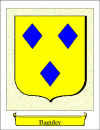
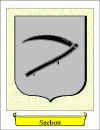
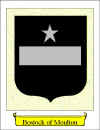
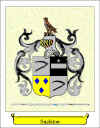
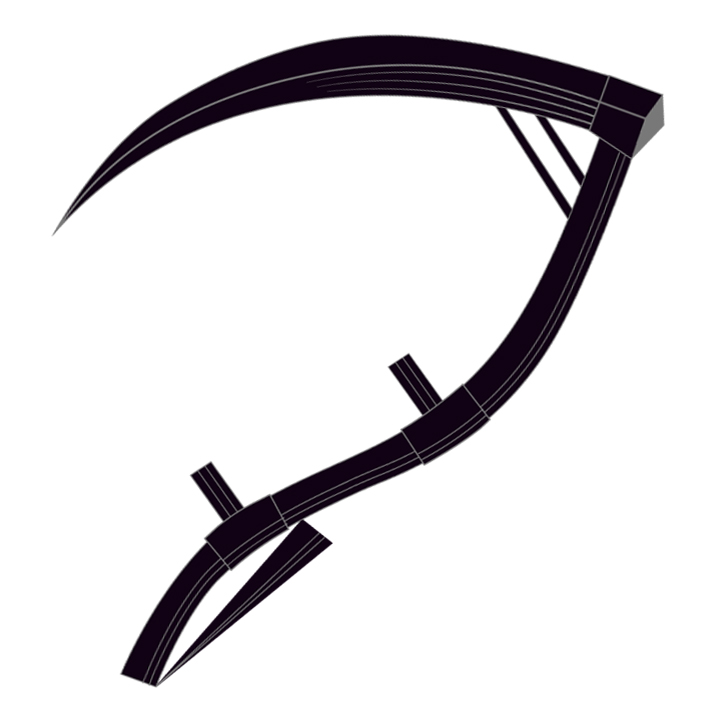
| ARMS | He; Here's how I think Roger Snelson the Dyer came to believe that he had a legitimate claim to bear the Snelson arms and the basis of his representations to the College of Heralds in London in 1633/34 :- (1) Margaret Snelson [6717] was the great-great granddaughter and heire of Thomas Snelston [5290] and Isabell Bostock [5291]. (2) Isabell Bostock [5291] is the granddaughter of David Bostock [6712] and Sir William Baguley [6718]. (3) David Bostock [6712] is the son of Ralph Bostock [6766] of Moulton and great-great-grandson of Sir William Bostock [6755] and Elizabeth Audley [6757] daughter of Lord Hugh Audley [6756]. (4) Alice Snelston [5041], the daughter of Robert Snelson [5040] and Margaret Shocklach [5039], married Robert Bostock [5037] of Churton, the great-grandson of Sir Adam Bostock [6765]. It looks like Alice was a widow at the time of her death. Whether Roger would have known all of this and used it as the basis of his claim to the Black Scythe Arms, is unknown as the papers may have been lost in the Great Fire of London in 1666.2,3,4 |
| Misc | With regard to Roger Snelson's association of dyers, an early reference to an existing guild (later the Worshipful Company of Dyers) is in 1188. They disputed precedence with the Shearmen; the Shearmen and Fullers became united as the Clothworkers; the long contest was settled in 7 Henry VIII (1516) in favour of the Clothworkers. Since then, the Dyers have been first on the list of minor companies. The industry is native to England and is possibly a development of the body-staining practices of the early Britons who are known to have dyed wool, silk and leatherwork. In 1372, there was an agreement with the Leathersellers, Pursers of the Bridge and the Dyers the wives of the Dyers are associated as parties. By the 15th Century, the art had attained great perfection with great varieties of colour as seen in the holiday dresses in all classes of the community. A charter of incorporation was granted by Henry VI in 1471 during his brief restoration. Edward IV gave a re-grant in 1472. The charter was confirmed by Henry VIII and succeeding monarchs including James I in 1606 and James II in 1686. Queen Anne granted a new charter in 1704 giving authority over the craft for 10 miles around London. The last confirmation of by-laws was in 1705. Since the First World War the Company has worked on the improvement of British dyeing and is now a charitable concern and one of the three authorities (along with the Crown and the Company of Vintners) charged with looking after the swans on the Thames. |
| Biography | Roger was a benefactor of the poor people of Islington and Macclesfield. He was a Member of the Guild of Dyers. His will is dated 22 September 1647. In 1647, Roger is listed by Earwaker as being a benefactor of Macclesfield poor people - he gave 30 pounds to buy bread. In this source he is described as a citizen of London. All Hallows the Great appears to be right under the current site of Cannon Street station although I can see on the map the adjacent All Hallows Lane. We now know that he was not buried at All Hallowes so for the time being I have assumed that he was buried at Islington St. Mary's. |
| Medical | All-Hallows-the-Great was a church in the City of London on what is now Upper Thames Street first mentioned in 1235. It was destroyed in 1666 in the Great Fire but rebuilt by Sir Christopher Wren, but finally demolished in 1894 when many bodies were disinterred from the churchyard and reburied at Brookwood Cemetery. |
| Birth | He was born about 1576 in Macclesfield, Cheshire. |
| Christening | Roger was christened on 22 June 1576 in St. Michael's, Sutton, Macclesfield.5,6 |
| Marriage | Roger Snelson and Mary Ford were married on 11 January 1604 in the parish church, St. James', Garlickhithe, London, Boyd's Marriage Index has her name as Mary Stockton.7 |
| Residence | He resided in London in 1622 according to Boyd's Inhabitants of London.8 |
| Occupation | He was a dyer in London in 1634.9,5 |
| Publicatio | He; 1634; London; Ormerod, History of the County Palatine of Chester10 |
| Residence | He resided in All Hallowes the Great in 1638 paying 20 pounds rent and id recorded in " |
| His wife Mary Ford died on 1 July 1640 in London. | |
| Tax-pollh | He; 1641; Downgate Ward, London; Roger is listed as a Common Councilman, and paid poll tax of 10 pounds. [[Principal Role]] [[Witness Role: taxpayer]] |
| Biography | The English Civil War or Great Rebellion was a series of civil wars and political machinations between Royalists and Parliamentarians in the Kingdom of England from 1642 to 1651. Part of the wider 1639 to 1653 Wars of the Three Kingdoms, the struggle consisted of the First English Civil War and the Second English Civil War. The Anglo-Scottish War of 1650 to 1652 is sometimes referred to as the Third English Civil War. While the conflicts in the three kingdoms of England, Scotland and Ireland had similarities, each had their own specific issues and objectives. It is not clear to me where Roger Snelson stood on the issues confronting the King (the divine right of the Monarch, King Charles 1, Prince Rupert, William Cavendish, Prince Maurice, George Goring, Ralph Hopton) - and the People (the right and powers of the Parliament and elected Members e.g. Robert Devereux, Edward Montagu, Thomas Fairfax, Oliver Cromwell, William Waller). |
| Will | He left a will on 22 September 1647National Archives Office - Original Will. |
| Will | He left a will on 22 September 1647A precis of this will was written by Charles J Snelson of Oakville, Canada - and appears in his book "A Snelson Genealogy".2 |
| Death | He died about October 1647, at age ~71, in London Address: Thames Street, All Hallowes, London.11,12 |
| Burial | Roger's remains were buried about October 1647 in St. Mary's, Islington, In his will, Roger says that he should be buried at All Hallowes the Great where he had long been a parishioner, should he die in London. However, were he to die in Islington in Middlesex, then he should be buried there, at the parish church, which I assume to be St. Mary's. [[Principal Role]] [[Witness Role: Buried]].13 |
| Obituary | Obituary from British Museum : Sloane 886 on 22 December 1648: Richard Smyth's Obituary ... Catalogue of all such persons deceased whom I have known in their lifetime ..... from MDCXXVIII., "Richard Smyth's Obituary," British Museum Sloane 886 (22 December 1648). [[Principal Role]] [[Witness Role: Deceased]].12 |
| Probate | The estate of Roger Snelson was probated on 4 January 1649 PCC Prob 11/207 qr19 Will dated 22 September 1647 Pr by Fais Thomson and Henry Arnold. [[Principal Role]] [[Witness Role: Deceased]].2 |
Citations
- [S474] Raymond Richards, Old Cheshire Churches
- [S362] Will of Roger Snelson Dyer Proved 4 January 1648/49
- [S1515] KING, Daniel, Daniel King's Vale Royal
- [S1516] A Snelson Genealogy - 1991 Supplement
- [S365] Visitation of London 1633/34 College of Arms Ms 2c 24/354
- [S1514] IGI 1988 Cheshire
- [S311] Extracts from Boyd's Marriage Index, R3-3117
- [S732] Boyd's Inhabitants of London
- [S735] Encyclopaedia of London
- [S232] George Ormerod, History of Cheshire
- [S390] The SNELSON Coat of Arms
- [S715] British Museum
- [S726] Burial of Roger Snelson, Islington, 1647
George W McMullen
M, #46, Deceased, b. about 1897
Interactive Pedigree Button
Parents
| Father | George McMullen (b. about 1874) |
| Mother | Sarah Ann Lewis (b. 7 September 1868) |
Main Events
| User Reference Number | George W McMullen; 23653 |
| Birth | He was born about 1897 in Shrewsbury. |