A Snelson DataBase and Index

Includes the Snelson Coat of Arms & Armory

Your Real Ancestors

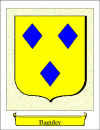
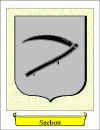
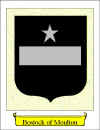
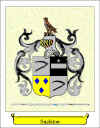
https://www.genarchives.com/snelson/NonTMG/baguley_small.jpgsnelston armsbostock of Moulton armsMacclesfield Chalice arms
 

Your Real Ancestors

I am not a geneticist. Some of my thoughts below may be below average. Some of the stuff coming out of 23andMe, Ancestry, FindMyPast and other money machines is batshit, nevertheless, it's sort of fun. Giving away your data having paid the same organisation for it, so that they can then sell it to others seems to be robo economics also known as robbery.

If you are interested in your ancestry, you will know that there is no such thing as “race”. We are all related to each other. We are all descended from common ancestors. We have all come out of Africa, and then a bit earlier the Big Bang ... and before that the Inflation ... and that's just our Universe. We may not be alone.

Genetically, there is no difference between Australian Aborigines, Anglo-Saxons, Arabs, Zalmoxianists, Zoroastrianists and Zulus, strange as that may seem. We are all descended from the same ancestors. We are “racially” the same. Skin colour, eyes, lips, height, brains, noses, hair - they may look like they are different … but underneath, we are the same.

100,000 years ago, we were all African. The only place to find Homo sapiens was in Africa.

There was inter-breeding with Neanderthals too, but you and I are unlikely to be descended from Neanderthals. It is true, that it is very, very probable that you have identifiable DNA, maybe 2% or more that you share with homo neanderthalenis, perhaps because we have common ancestors. Are some of us descended from Neanderthals, possibly, because there was inter breeding – but have those lines survived, I guess we will never know.

Look at it this way, you share common DNA with your cousin – but you are not descended from your cousin. You are not descended from your sister, your great aunt, your 4th cousin or your uncle Gerry – although it is possible that your Uncle Gerry may be your Dad - even though you share much more DNA with them than with any neandethal that ever walked this planet.

However, it looks like we modern humans (Homo sapiens), neanderthals (Homo neanderthalensis) and the denisovans (Homo denisova) of East Asia are related – that is, we are all descended from Homo heidelbergensis. Another possibility is that the common ancestor is the contender found in the Iberian Peninsular, being Homo antecessor.

Homo floresiensis is an extinct species of small humans that inhabited the island of Flores in Indonesia, until the arrival of modern humans about 50,000 years ago. These findings are highly controversial today because there are very few samples, maybe nine individuals who stood about 1.1 m (3 ft 7 in) in height. The Homo floresiensis skeletal material is now dated from 60,000 to 100,000 years ago; stone tools recovered alongside the skeletal remains are from 50,000 to 190,000 years ago.

If we select two Africans at random and compare them to two randomly selected people of mainly European descent, then from a DNA perspective, there will be more similarity between each African and either European than we would find between the two Africans.

Not everyone who lived a thousand years ago has descendants today. Relatives yes, descendants no. I have used 30 years as the length of a generation, but it was closer to 20 years in earlier times when humans mated younger and life expectancies were shorter.

If your background is continental European, then you may indeed be descended from :-

  • Charlemagne the Great; and
  • Alexander the Great

If your background is basically British, then you are more likely descended from :-

  • Alfred the Great
  • Edward III; or
  • William the Conqueror

I used to have Richard II in this list, but he had no children that we know of, was perhaps too busy fighting and watching his back, and may not even have been interested in heterosexual activity, but he may be a relative for sure … and before you ask, you are surely also related to Richard III, Leicester’s longest-offending, resident, Plantagenet, parking personality.

How do we know this ? Well, if you go back in generations, doubling the number of ancestors at every say 30 years or so, then going back 1200 years to 800 AD (CE) would take say 40 generations. Work it out, if you go back 40 generations, you have over two trillion ancestors! There were not that many people on the planet 1200 years ago. One G-G ancestor say 30 generations ago is also likely to be an Uncle of a different generation. As we are now aware of the dangers of interbreeding and because there is more choice, better education, greater mobility of peoples there is less repetition nowadays than there was more than 10 generations ago, say 300 years in about 1700 AD (CE).

This is the difficult notion of implex, being the genealogical coefficient of a given genealogical tree; defined as the difference between the number of theoretical ancestors of a person and the number of his/her real ones in a given generation.

Put another way, if you postulate that 1000 years was 30 generations ago then your theoretical number of ancestors is two to the 30th, or just over a billion: 1,073,741,824. This is impossible as nowhere near that many people were alive back then.

As for religion, 99% Plus of all mankind has adopted the religion of their parents, well at least in the beginning. Science has over the last 500 years had an increasing impact on thinking people. There is no proof for any of the religious beliefs in scientific terms. Did the people cited actually exist – definitely for a few, probably in some cases, possibly in others … and absolutely not for the whackos – you know who they are. It is very likely that if you have a religion, it is an accident of your birth. If you have changed religion or started your own, then that is unusual – and best of luck with that one.

Me … I was brought up as a Protestant … but that was abandoned a long time ago and today I just believe in the science. I don’t care for any religion or churches particularly, and I certainly regard some activities as less than wholesome (you know what I mean). Some of my best friends are men and women of the cloth, devout Muslims, Hindus, Jews and even Roman Catholics. I am not an atheist nor an agnostic – if anything, I think I am sort of a humanist. However, I find all the pomp, arrogance, lies, images and ceremony such a farce.

Now, onto some DNA details. The term "haplogroup" refers to a family of lineages that share a common ancestor and, therefore, a particular set of mutations. Each paternal haplogroup is named with a letter indicating the major cluster of branches to which it belongs, followed by the name of a mutation that is shared by a subset of the major cluster. Haplogroups are determined according to which branches of the Y-chromosome tree correspond to your DNA. As more closely related lineages tend to share geographic roots, the haplogroup can provide insight into the origins of some of ancient ancestors.

As for the tests and Neanderthal blood, I only have 262 Neanderthal Variants – less that 68% of most other people. The highest that has been recorded I believe is a match of 397 Neanderthal Variants. I am quite disappointed by that lower score (😉}.

My maternal haplogroup is Group V. My known ancestors have 91% British and Irish blood and the remaining 9% are French and German. Less than 10% of 23andme customers are in maternal haplogroup V. However,

Haplogroup V derives from the HV0a subclade of haplogroup HV. Recent estimates of the date of V would place it in the Neolithic.

Haplogroup V is a relatively rare mtDNA haplogroup, occurring in around 4% of native Europeans and would have arisen in the Late Glacial period, some time between 16,000 and 12,000 years ago. Its highest concentration is among the Lappland Saami peoples of northern Scandinavia and it has been found at a frequency of approximately 10% among the Maris of the Volga-Ural region, leading to the suggestion that this region might be the source of the V among the Saami. Additionally, haplogroup V has been observed at higher than average levels among Cantabrian people of northern Spain and the Basque peoples. Membership of Haplogroup V includes Benjamin Franklin which is just great - and Bono.

Paternally, I am of course in Haplogroup A descending through haplogroup F-M89 (76,000 years ago) to K-M9 (53,000 years ago) to R-M207 (35,000 years ago), then from more than 35,000 in haplogroup R-M343 (some 27,000 years ago and on say 400+ generations to R-M269 (10,000-27,000 years ago) and then in the the last 10,000 years in R-CTS241. If you are into haplogroups I guess you will understand all that better than I do.

Less than 5% of the 23andme customers share the R-CTS241 assignment. Further back in time, over 80% of men in Ireland and Wales carry the haplogroup R-M269, as do over 60% of men along the Atlantic Coast from Spain to France. The frequency of R-M269 gradually decreases to the east, falling to about 30% in Germany, 20% in Poland, and 10-15% in Greece and Turkey. The haplogroup connects all these men to still others in the Iranian Plateau and Central Asia, where between 5 and 10% of men also bear the lineage.

Do I believe in God ? It depends on how that word is defined. I certainly don’t believe in a caring, loving and intervening deity, I believe truth, facts, in the science. If “God” is facts, evolution, natural selection, DNA, men on the moon, Einstein’s E=mc2, particle theory, quantum mechanics, Newton’s F = G m1 x m2 / r2 … and that there is no such thing as “race”, then yes, I do.


NameLifespanSpouseHeading One
Frances EnglishB. 1875, d. 1959Alfred Herbert Roby, M MThe Roman Catholic Church - but I never saw or heard from her or my mother anything that suggested she had any connection with those RC beginnings. My Mum was active in the CofE church of St. John at Fairfield in Liverpool.
Book Binder
64
Alfred was baptised in a Church of England in Prescot, St. Mary’s. His wife-to-be, Frances English, who was baptised in a RC church. So, perhaps it is not surprising for them to get married in a Registry Office.
1875, 22 Barmouth Street, St. Martin, Liverpool, England, There is no doubt that Frances is the daughter of Joannes English and Brigida Power - I say this because Frances' parents were Roman Catholics and consequently quite difficult to trace back through the records. I knew her well and never knew she had been brought up in the RC church. I note that Frances was born in England and her younger sister Maria Brigida English was born in Ireland. Their father was often away at sea, being a ship's baker. His ships often visited Liverpool. It is not clear to ne exactly when John and Brigid settled in Liverpool, but given the birth dates of these two children, it must have been 1872, 1873 or 1874. [[Principal Role]] [[Witness Role: ]]
1875, St. Albans RC Church, Liverpool, I note that she is referred to as "Francesca English".
1881, Everton, Liverpool, Address: 3 Crouch Street, St. Domingo Grove His wife Brigida is shown as a ship baker's wife with a notation "husband at sea". [[Witness Role: Daughter]]
1881, 3 Crouch Street, St. Domingo Close, Everton, Witness Role: Daughter
1886, Our Lady of Immaculate Conception, Address: St. Domingo Road, Everton Yes, I can't believe it - confirmed in the RC Church. I see that the Nomina Patrinorum is "Maria Power". Now, who could that be ? It means "God Parent". My guess is that she is Brigida Power's unmarried sister but I cannot prove that. She certainly wasn't a practising Catholic when she lived in my home in Bowring Park towards the end of her life. [[Principal Role]]
1901, Liverpool, book binder
1901, 34 Rose Place, Everton, In the 1901 Census, she is listed as "Fannie English", a 26 year old book binder, and a visitor in the home of the Harvey family, along with other servants and visitors including Mary Power, unmarried aged 56, recorded as working presumable in this home, as a servent and housekeeper. She may be a sister of Brigida Power (c.1852-1905), and born in Ireland - or more likely, Mary Power [23581], daughter of Thomas Power and Ellena O'Brien.
1905, 74 Butler St, West Derby
1905, The Registry Office, West Derby, (Reference :- REG_WD/216/132) Reference 8b 727 Liverpool. I wonder whether the marriege took place in the Registry Office because Alfred was a Protestant and Frances a Roman Catholic. I have no knowledge of the reason ... but I note that young Alfred was born 18 months later, so we can rule that one out.
1911, Fairfield, Liverpool, Address: 38 Whitcroft Road [[Witness Role: Wife]]
1921, Liverpool, Address: 38 Whitcroft Road, Fairfield, Liverpool East [[Witness Role: Wife]]
Bet 1935 and 1936, Fairfield, Liverpool, Address: 18 Elm Vale Interestingly, Harold Snelson was living a few hundred yards or so away from the Roby family, in 5 Elstree Street from Irene Roby at 18 Elm Vale. We know they both went to St Johns Church and played badminton together. So, almost boy and girl next door. Witness Role: resident
Abt 1955, 18 Elm Vale, Fairfield, Liverpool, England
Bet 1955 and 1959, Liverpool 16, Address: 112 Bowring Park Avenue at my home - she lived basically upstairs in our back bedroom and Peter and I shared the small box room bedroom.
1959, I have the original funeral documentation supplied by the undertakers, Thompsons ( Rimmers ) Ltd, 299 Kensington, Liverpool 7.
1959, Bowring Park, Liverpool, England, Address: 112 Bowring Park Avenue The entry in the registry says that she was 83 at time of death, making her birthdate circa 1876.
1959, Anfield, Liverpool, Address: the Crematorium I have the original funeral documentation supplied by the undertakers, Thompsons ( Rimmers ) Ltd, 299 Kensington, Liverpool 7.
Patricia Mary LeesonB. 1915, d. 1979Alfred RobyAccording to a cutting from the Halifax Courier and Guardian, Saturday, July 26, 1941 : - Roby, only son of Mr. and Mrs. A. H. Roby, 18 Elm Vale, Fairfield, Liverpool, and Mis Patricia Mary Leeson, only daughter of the late Mr. A. M. Leeson and Mrs. Leeson, 23 Nursery Lane, Ovenden. The ceremony was performed by the Rev. H. Palmer M.A. attended as matron of honour by Mrs. C. A. Kesterton wore a French-grey tailored costumeof boucle, with knife pleated skirt. Her hat was of the same material and she carried a spray of pink rosebuds. Mr A. N. Spencer was best man and the groomsmen were Messrs F Chambers and J. Alexander. A reception was held at the White Swan Hotel, Halifax I remember her with great affection as "Aunty Pat" ... she was always very kind to me, and forever will I remember her strange way of beginning to laugh - which started as a distinct "Tssssssssssssst" ... very infectious and becoming I thought.
461
She was given away by her uncle, Mr. J.W. Collins. and attended by her matron of honour, Mrs. C.A. Kesterton. Groomsmen were Mr. F. Chambers. and J Alexander.
1915, Carlisle, Cumberland, England
1921, Elmfield Terrace, Halifax, [[Witness Role: daughter]]
1939, Halifax, Yorkshire, Interestingly, in the records for the 1939 census, her surname "Leeson" has been crossed out and the name "Roby" inserted. There is an "S" denoting status as "Single". In the address column the letter "M" appears. One can only guess., teacher, domestic science
1939, Address: 23 Nursery Lane, Halifax [[Principal Role]] [[Witness Role: daughter]]
1941, 23 Nursery Lane, Ovenden, Halifax
1941, the local parish church, Ovendon, Halifax
1947, 4a Beech Mount, Fairfield, Kensington, Liverpool, [[Witness Role: wife]]
1951, Salcombe Drive, Hunts Cross, Liverpool, [[Witness Role: wife]]
1979
1979, Address: 18 Cambridge Road, Prenton, Birkenhead GBP 2873 Administration Liverpool . I had thought that Pat died in 1970, but the Probate is in 1979 and say date of death was 30 March 1979.
Alfred RobyB. 1906, d. 1984Patricia Mary LeesonOil Company Sales Representative (Lobitos)
68
Uncle Alf was a favourite of mine. He saw me as a "Roby" rather than a "Snelson", most likely because we always got on very well, in fact for some unkown reason, I think he had a soft spot for me. Must have been the nose ! I think at one time, he was working with Lobitos, an American oil company. Later, he retired; I think he might have taken an early shower and was perhaps retrenched. In any case, he opened or bought a sweet shop somewhere in the Wirral - perhaps near Prenton where he lived. He was a keen golfer and I am sure that he followed rugby union and cricket quite closely. It's a pity he's still not around, because I am sure he would have enjoyed a few digs about the the shabby state of English cricket and rugby, compared to the Australian ! It was Uncle Alf who rang me in New Zealand in 1975, and told me of the death of my father. I am sure that was not an easy thing to do, but I will always remember his words. He didn't mind a pint or two, and was always good company - I liked him very much, and was very sorry to hear that he died shortly after I saw him in 1981. He had not been well for some time.
My uncle Alf worked for an oil company called Lobitos., Oil Sales Representative
She was given away by her uncle, Mr. J.W. Collins. and attended by her matron of honour, Mrs. C.A. Kesterton. Groomsmen were Mr. F. Chambers. and J Alexander.
1906
1906, Christ Church, Kensington, Liverpool 6
1911, Fairfield, Liverpool, Address: 38 Whitcroft Road [[Witness Role: Son]]
1921, Liverpool, Address: 38 Whitcroft Road, Fairfield, Liverpool East [[Witness Role: Son]]
Bet 1935 and 1936, Fairfield, Liverpool, Address: 18 Elm Vale Interestingly, Harold Snelson was living a few hundred yards or so away from the Roby family, in 5 Elstree Street from Irene Roby at 18 Elm Vale. We know they both went to St Johns Church and played badminton together. So, almost boy and girl next door. Witness Role: resident
1941, the local parish church, Ovendon, Halifax
1947, 4a Beech Mount, Fairfield, Kensington, Liverpool, [[Principal Role]] [[Witness Role: Resident]]
1951, 29, Salcombe Drive, Hunts Cross, Liverpool, [[Principal Role]] [[Witness Role: Household Head]]
1975, 18 Cambridge Road, Prenton, Wirral, Cheshire
1984, Arrowe Park, Birkenhead, Address: 6 Parkland Court
1984
1984, "not exceeding 40,000 pounds".
Alfred Herbert Roby, M MB. 1873, d. 1955Frances English The Battle of Albert (21–23 August 1918) was the third battle by that name fought during , following the","First Battle of Albert" and the Battle_of_Albert_(1916)","Second Battle of Albert" , with each of the series of three being fought roughly two years apart. This smaller third battle was significant in that it was the opening push that would lead to the end and involved attacks which developed into an advance, which pushed the enemy back along a 50-mile (80 km) front line. On 22 August, the 18th (Eastern) Division took Albert, with the British and Americans advancing. The following day, the Australian 1st Division which was advancing north-east from Proyart, attacked German fortifications around Chuignes and succeeded in capturing the town. On 29 August, during the Second Battle of Bapaume, the town of Bapaume fell into New Zealand hands. This resulted in an advance which crossed the Somme River on 31 August and broke the German lines during the Battle of Mont St. Quentin. The Westheer German armies on the Western Front was pushed back to the Hindenburg Line from which they had launched their spring offensive.
Records of Liverpool Grain Storage and Transit Company Limited - 1883-1983 The firm was started in 1883 and had just one installation at Alexandra Dock. In its prime it had four, with facilities at Birkenhead, Brunswick and Coburg Docks. The firm went into receivership in 1990. Various records have survived including 22 minute books and loose records that cover most of the years between 1883 and 1972. A large quantity of technical drawings (B/LGST/4) are also included, but these still await sorting. For further details contact The Archives Centre for a copy of the catalogue. Sections B/LGST/1-3 are stored offsite and will be recalled upon request. Please contact The Archives Centre with details of the items you wish to consult and to arrange a visit to the Searchroom. National Museums Liverpool. B/LGST, Document, 1883-1983, Long Term Loan, Available at the Archives Centre MMM (by appointment). Medical Reports from Military Service Medical History - Enlistment ROBY, Alfred Herbert Birthplace Prescot, Lancashire Examined 20 September 1915 at Liverpool Declared Age 38 Years 180 days Height 5 feet Chest 35” Expansion 1” Vision R.E. V= Good Enlisted 20 september 1915 at Liverpool 266253 Injury Award Sheet - First Award ROBY Alfred Herbert. Regiment Som. L. I. (Somerset Light Infantry).Date of Discharge 22 March 2019 Cause of Discharge : Disembodied.Entered on Conditional List 22 Feb 1920. Married 4 Feb 1905. Irene 5.1.15 and Alfred 25.8.1906. Award 1. Chondroma Rib - Chest & 3. Hernia retained by truss 20% 5/6 from 26 Aug 1919 to 2nd Sep 1919 then 8/- for 60 weeks from 3rd Sept 1919. Dated 12 Feb 1920 Verify Wife Pension Expires 26 October 1920. Medical Report on Soldier Boarded Prior to Discharge or Transfer to Class W., W. (T), P., or P. (T), of the Reserve. ROBY Alfred Herbert, 266253, Somerset I. Pte. Age last birthday 46. Posted for duty 20.9.15.at Weston Camp, Blackpool which was an important training town for the north west during the First World War with a reported 14,000 troops billeted there in November 1914. Practice trenches were constructed in the town to train troops for war. Arthritis R Knee. Original Disability during August 1916 at Blackpool during training. Knee strained and sent to Osestry Hospital. Later in 1918, he strained his chest muscles and fractured a rib during training. A small R. hernia was present on enlistment. Evidently, examination confirmes the synovial membrane which lines and lubricates the knee joint, was inflamed. Swelling or stiffness are symptoms that may follow another injury, arthritis, or gout. In September 1916 he was admitted to Hospital with Synivitis and spent 30n days in hospital. and at the end the doctors advised “IN addition to synovitis there is chronic osteoarthritis of the right knee. Renewal or Revision of Award Opinion of Medical Branch 16 September 1920 - Case to be sub,itted to Settlements Disabilities : Synovitis, L Rib, Hernia. No gounds for further award. Case to be submitted to Entitlement Board, Entitlment Hernia. Decision Award. Hernia. 1% P. £25-0-0 + £7-10-0 = £32-10–0. Pension Expires Final Gratuity. Opinion of the Medical Board (a) Synovita knee (b) strained chest (c) hernia. He complains of a strained knee, - no enlarge. (b) left costal arch enlargement, sixe of x: not tender (c) small R inguinal hernia (bubonocule) x retained by truss. Total disability is 20%. Was an operation advised ? NO. Did the Board recommend dicharge as phusically unfit for further War Service? NO. Did the Board oplace him in Grade IV? NO. In what other Grade did the Board place him? III Do the Board find that the soldier has suffered and impairment in health since his entry into the Service? YES. Is treatment recommended? YES Present truss is worn out. Operation not advised. It looks to me that the disabilities were not attributed to service during the War 1914-1918. The Board decides that the specific condition that caused these disabilities were in fact “constitutional” and were not in a “final stationary condition” a.d were likely to last for twelve months.
At a school in Prescot
Grain checker in 1918 - maybe at Coburg Dock.
Corn porter at a grain warehouse in 1911 - living at Whitcroft Road in Fairfield
Collector in 1905 - and in 1906 as an insurance agent.
Grain porter at Coburg Dock in 1921 - See Notes to the 1921 Census
Bamboo worker in 1901 at 281 Upper Parliament Street in Liverpool.
Pawn broker’s apprentice at 81 Old Chester Road in Birkenhead in 1891
Awarded the Military Medal - an award to personnel of the British Army and other arms of the armed forces, and to personnel of other Commonwealth countries, below commissioned rank, for bravery in battle on land.
Alfred was baptised in a Church of England in Prescot, St. Mary’s. His wife-to-be, Frances English, who was baptised in a RC church. So, perhaps it is not surprising for them to get married in a Registry Office.
1873, Carr Lane, Knowsley, Liverpool, England, He was a twin - his sister Alice Jane Roby was his twin sister.
1873, St. Mary-the-Virgin, Prescot, Baptism: 16 Apr 1873 St Mary the Virgin, Prescot, Lancashire, England. Alfred Herbert Roby -[Child] of John Roby & Ellen. Abode: Knowsley. Occupation: Watch-Maker. Baptised by: F. de L. White Curate. Register: Baptisms 1870 - 1879, Page 83, Entry 658. Alfred Herbert Roby and his sister Alice Jane Roby were twins and were baptised together on 16th April in 1873. Baptised at the same time was their brother, Fred Foster Roby, although he was born earlier in 1870. [[Principal Role]] [[Witness Role: Christened]]
1881, I think a local school in Prescot, Lancashire
1881, Prescot, Lancashire, Address: 2 East View [[Witness Role: Son]]
1891, 81 Old Chester Road, Tranmere, Birkenhead, Cheshire, Mary Bentley is a 52 year old lady running a pawn broking buisiness. Alfred is presumably living there.
1901, Liverpool, Address: 281 Upper Parliament Street [[Witness Role: Son]]
1905, 125 Needham Rd, West Derby
1905, The Registry Office, West Derby, (Reference :- REG_WD/216/132) Reference 8b 727 Liverpool. I wonder whether the marriege took place in the Registry Office because Alfred was a Protestant and Frances a Roman Catholic. I have no knowledge of the reason ... but I note that young Alfred was born 18 months later, so we can rule that one out.
1905, Alfred Herbert Roby aged 31 is described as a Collector. They were married at the West Derby Registry Office. In 1938, he was living at 18 Elm Vale - I know this house well. I have been there many times. It's on a corner. There is a back alley. Dark staircase, cold stone scully. Front parlour were my grand dad lay dead in his coffin in 1955. I was 10 years old, my Mum took me in there and said "Here's your grandfather, isn't he beautiful". I said "No, he's dead". Earlier, in 1938 he is described as "a weighman". As a reference on leaving military service, the Certificate reads "This soldier has done exceptionally good work as a stretcher bearer in the line : unfailing in his duty, he has borne hardships and fatigues that would have done credit to a much younger man. Honest, sober, trustworthy, industrious, clean, intelligent." Title Pte Alfred Herbert Roby (medals; letter; certificate) Who? Private Alfred Herbert Roby, 266253, Somerset Light Infantry. Item(s) Military Medal, British War and Victory Medals, letter from C.O. regarding the award of the Military Medal, and Certificate of Employment During the War. Story Alfred Herbert Roby, born in February 1873 in Knowsley, Lancashire, served with the 11th Battalion of the Somerset Light Infantry late on in the First World War from May 1918 until March 1919. Having originally enlisted in September, 1915, he was primarily employed as a stretcher bearer with the 11th Somerset Light Infantry and was awarded the Military Medal in March 1919 for his service in this role. When? May - November 1918 Where? The Somme region of France, including the Battle of Albert in August 1918. Contributor Denis Roby Collection Day Stourport-on-Severn Library, 10th November, 2018. Item sets Stourport Library, Stourport-on-Severn (10/11/2018) LWF
1911, Fairfield, Liverpool, Address: 38 Whitcroft Road [[Principal Role]] [[Witness Role: Head of household]]
1914, Alfred was deployed in France from May 1918 to February 1919 with the 11th Battalion Somerset Light Infantry as a Private (Reg # 266523).
Bet 1914 and 1919, Soldier
1918, See notes
1919, Private Roby - #266523 - Disembodiment - discharged from The Somerset Regiment L 9. In the military sense disembodiment usually means separation of the body of troops as in disbanding rather than the philosophical sense of separation of the soul from the body. During wars, regiments of the British Army generally raise extra battalions above the usual one or two in peacetime. The battalion is the fighting unit of infantry, commanded by a Lieutenant Colonel and consisting of 600 or more men. In WW1 many regiments had 10 or more battalions. It is easy to understand that a good deal of time was needed to reduce the army to peacetime strength. The four options mean something like this Discharge - Discharge of the individual soldier. Transfer to the Reserve - This speaks for itself. Disembodiment - Separation of the man from the battalion Demobilisation - Removal of the battalion from the active list and disbanding. However, I note that he was discharged on medical grounds, with a rupture retaine by a truss and a condition described as "chrondroma rib", 20%
1919, Military Medal was awarded only to lower non commissioned ranks for bravery in battle on land. My cousin Denis Roby sourced and wrote about our grand-father's medals and war history. British War Medal and Victory Medal, Private in the 11th Battalion, Somerset Light Infantry. Alfred H Last name Roby Service number 266253 Rank Private Corps Somerset Light Infantry Service record Soldier Number: 266253, Rank: Private, Corps: Somerset Light Infantry Archive reference WO372/17 Archive reference description Campaign Medal Index Cards and Silver War Badge Cards Country Great Britain Image link Record set World War One British Army medal index cards Category Armed forces & conflict Subcategory First World War Collections from United Kingdom From Laft to Right:- British Allied Victory Medal, only awarded to those who entered an area of active service. Number, Rank, Name, Unit impressed on the rim. 5.7m issued. 2. British War Medal, issued to officers and men who entered a war zonei or served iverseas. 6.4m issued. 3. Military Medal. Issues to those below commissioned rank for bravery in battle on land. Recipients entitled to use pro nominals after their name as “MM”.
1921, Liverpool, Address: 38 Whitcroft Road, Fairfield, Liverpool East [[Principal Role]] [[Witness Role: Head of household]]
1939, Huyton With Roby, Liverpool 16, Address: 112 Bowring Park Avenue Source 5994 Census 1939 Huyton With Roby, Liverpool 16 RG101 (RG101/4791C/009/27 Letter Code: NVGO), (RG101).
1955, 18 Elm Vale, Fairfield, Liverpool, England
1955, West Derby Cemetery, in Liverpool, Grave 407 S7 [[Principal Role]] [[Witness Role: buried]]
2024, 67
Irene Nettacress RobyB. 1913, d. 1984Harold Cecil SnelsonBook Keeper, Accountant
Church of England
27
1913, Fairfield, Liverpool, England, The baptism certificate gives the date of birth as 5 January 1913 - and the date of baptism as 30 March 1913, 8 weeks later.
1913, Kensington, Liverpool, Address: Christ Church Her address is given as 38 Whitcroft Road (which is just around the corner in the next street to Elm Vale). Her father Alfred Herbert Roby is described as a grain porter. Her name has been corrected to this spelling "Irene Netticress Roby". Originally the middle name had been written as "Nefficreff" or possibly “Neggacreff”. Christ Church was an Anglican Church, and Kensington meets up with Prescot Road, so not far (Within a few hundred yards from Elm Vale and Whitcroft Road. I note that my mum signed her name in 1939 on the Marriage Banns as Irene Nettacress Roby.
1921, Liverpool, Address: 38 Whitcroft Road, Fairfield, Liverpool East [[Witness Role: Daughter]]
Bet 1935 and 1936, Fairfield, Liverpool, Address: 18 Elm Vale Interestingly, Harold Snelson was living a few hundred yards or so away from the Roby family, in 5 Elstree Street from Irene Roby at 18 Elm Vale. We know they both went to St Johns Church and played badminton together. So, almost boy and girl next door. Witness Role: resident
1938, St. John the Divine, Fairfield, Liverpool, They were married at the church of St. John the Divine, Fairfield, Liverpool on Saturday 2nd April 1938 at 2-00 PM. The reception was held afterwards at the Francis Cafe, Parker Street, Liverpool ( I have one of the original invitations ). I see that the Witnesses were Best Man George Leslie ("Les") Young and the Bride's Maid was Doris C Jones - I think this must be the future wife of George Scardifield, draughtsman who worked at Saunders Row, Cowes, Isle of Wight. Doris and My Mum Rene Roby were best friends.
1939, Huyton With Roby, Liverpool 16, Address: 112 Bowring Park Avenue Source 5994 Census 1939 Huyton With Roby, Liverpool 16 RG101 (RG101/4791C/009/27 Letter Code: NVGO), (RG101). Principal Role Witness Role: Head of Household Witness Role: wife
1939, Huyton With Roby, Liverpool 16, Address: 112 Bowring Park Avenue
1939, Huyton With Roby, Liverpool 16, Book keeper, accountant
1965, "Stefan the Tailor", North John Street, Liverpool, the bookkeeper
1984, a Crematorium, Wirral
1984, Cheshire, England, Address: the Wirral
1994, ROBYIR13
Georgina Elizabeth SleeB. 1953, d. 201130
Gina
1953, Soham, Cambridgeshire, England, Gina's father was George Horsman Slee. He was also the father of her brother Bill (William). Nobody knows the full story here - but suffice it to say that although he may have had other qualities, he left Joan to bring up three children, two of them were his. I have no detailed information - Joan Ferraby took her side of the story to the grave. I did ask her what happened, but she would not say. I would say though, that she retained some affection for George. Nevertheles, no matter how you cut it, to have 2 children in Cambridgeshire while still married to another woman in Lancashire with whom you have also had children, and leave that second partner all alone with 2 kids, sounds like a pretty rotten thing to do. That's all I will say. As we now know, George went on to start a third family elsewhere in Yorkshire.
1960, from Georgina Elizabeth Slee to Georgina Elizabeth Ferraby ... she may have been named Georgina after her father. I understand that the name change was effected so that all the children had the same surname, Ferraby. I believe that Joan Ferraby never actually married George Slee, as he was already married and not divorced until circa 1972 from Mary Hawken, and Joan may still have been married to Robert Douglas Ferraby when Bill and Gina were born. I think though that Joan Ferraby was known as, and called herself Joan Slee - as that's what the Deed Poll says ... "known as Joan Slee". It does not say that this was a registered married name. If Mary Hawken did not agree to divorce George Slee until the '70s, it is hard to see how Joan could be married to him - I guess she could have had her name changed legally, perhaps by a prior Deed Poll, to Slee so as to appear to be married to him. After all this time, let it all fall where it may, as it does not matter any more, as we can see the relationships and there are no doubts about them and the main parties to these affairs are dead and gone. I have corresponded with Professor Peter Slee and we are in agreement. However, the Hawken, Slee, Ferraby and Snelson children might like to know about their half brothers, sisters, aunts, uncles and cousins. [[Principal Role]] [[Witness Role: Individual]]
1971, Ely, Cambridgeshire, Address: 168 Main Street [[Witness Role: Daughter]]
1973, 168 Main Street, Ely, Cambridgeshire
1973, the Registry Office, Ely, Cambridgeshire
Abt 1973, Australia on Sabena Airlines via Hong Kong, to Kingsford Smith International Airport, Sydney, Australia, [[Principal Role]] [[Witness Role: Immigrant]]
Bet 1979 and 2011, Turramurra, Australia
2007, Ravenswood, Gordon, the Australian Community Award "for outstanding service, contribution and dedication to the community" by The Minister for Defence, Dr Brendan Nelson AO, Member for Bradfield, on behalf of the Prime Minister, The Hon. John Howard [[Witness Role: Witness]]
2011, Greenwich Hospital, NSW, Australia, After a long fight from 2008 with cancer, she passed away at about 1-20pm
2011
2011, Macquarie Park, Sydney
2012, Macquarie Park, Chatswood, A plaque was fixed to the burial spot in Macquarie Park, in the Olive Grove, #40 Row 5. The words were carefully chosen by John, James and Bonnie to try and describe her in the few words that would fit on the plaque. Accordingly the inscription is about her - and not a word about us - as it should be.
Harold Cecil SnelsonB. 1911, d. 1975Irene Nettacress Roby25
Church of England
Hospital Secretary
25
Event Memos from GEDCOM Import... Anecdote Here's an extract from the West Derby Reporter, Friday 29th March 1963, taken from an article reporting a talk given by Councillor A L AUDLEY to the West Derby Conservative Association 'ladies'. There are few dull moments in the life of a fireman in Liverpool. The varied character of the city's buildings, the many different industries, and the part Liverpool plays as a great seaport - all present their special challenge to the Fire Service, both in firefighting and fire prevention.......... Liverpool Fire Service was under Liverpool Corporation , and was formed on 1st April 1948, when the National Fire Service was disbanded. prior to the formation of the national Fire Service in 1941, the Liverpool Fire Brigade was part of the City Police Force, and had been in existence since 1836. There were 12 fire stations in various parts of the city. In addition, the service maintained the fireboat William Gregson (309 gross tons), the crew of which consisted of firemen with sea going experience. Speaking of the early history of the Liverpool Fire Service, Coun. Audley said records went back as far as 1550, when the Mayor and Council ordered that gorse stacks were not to be erected near houses. In 1582, the Town Clerk was fined 4d for keeping "fire in his chamber" - being a place unfit for the purpose, and a dangerous thing. In 1629, a bellman was appointed to patrol the streets, warning citizens of fire danger by ringing his bell. Almost a century later, in 1718, three fire engines were provided for the town, with three dozen leather buckets supplied at the expense of the local authorities. The first case of arson was recorded in 1730, and three years later the first fire engine bought with municipal funds was put into service. A disastrous fire occurred at the Town Hall in 1795 "causing great consternation, trouble and loss to the council" Then in 1802, the Goree warehouse was burned down, the damage amounting to £323,000. The ruins continued to smoulder for over three months. In 1824, the premises of Duncan and Sons, rope makers, in Brownlow Hill, were set on fire by Sylvester THORNTON, a youth of 15. He was transported for seven years. Eighteen years later, in 1842, a great fire involved Crompton Street, Formby Street and Neptune Street. One fireman and three labourers lost their lives, and the damage was £500,000. A fire chemical engine was bought from USA in 1896, and in 1902 the first petrol-driven engine was purchased, but found to be unreliable. The year 1911 was marked by a big fire and explosion at J Bibby and Company's premises. Thirty-six people were killed and 100 injured. By 1916, horses were finally disbanded in the brigade. Before the last war, in 1938, the strength of the Liverpool Police Fire Brigade totalled 186 officers and men, a total progressively increased from 120 in 1921. During this period, the self-propelled steam motors were replaced by 1,000 gallons-a-minute modern petrol motor fire pumps carrying a 50 ft fire escape. In the early part of 1940, the strength of the brigade was further increased by selected members of the Auxiliary Fire Service, who later shared the brunt of enemy attacks. By the end of 1940, a total of 2,640 officers and men were available to the Fire Brigade, manning 400 large, medium and small pumps. More than 40 members of the Liverpool fire services lost their lives through enemy action between September 1939 and August 1941. Thirty-four members of Liverpool Fire Brigade and the AFS received decorations and awards, including George Medals. The first relatively big attack on the city occurred on 17th August 1940, and was followed by a period of almost continuous raiding until the end of November. On 21st August, the service attended over 100 fires, the most serious being at the Customs House and a number of cotton warehouses. On 17th September, eight auxiliary firemen lost their lives when their station in the Old Swan received a direct hit. On the nights 20th/22nd December, there was as many as 500 fires. the seven consecutive night of attack at the beginning of May, 1941, fully extended the service, the worst night being the 3rd and 4th May, during which there were 400 fires. An ammunition ship in the docks was set ablaze and blew up. The Fire Services Act of 1947, which brought the National Fire Service to an end, came into operation on 1st April, 1948, and places on fire authorities the duty to make provision for fire-fighting. Councillor Audley said an interesting fact was that in 1858, the cost of the brigade was £1,925.12s. 5d. while in 1952 the sum was £666,275 9s. 11d - charged to the rates.
1911, Isle of Wight, England, Address: at Totland Bay, Freshwater
1917, Victoria Road, Chester
1921, Lancashire, Address: 30 Mersey View, Brighton Le Sands [[Witness Role: son]]
1933, Fairfield, Liverpool, Address: 33 Prospect Vale, Liverpool 6
Bet 1935 and 1936, Fairfield, Liverpool, England, Address: 5 Elstree Road Witness Role: resident
1938, St. John the Divine, Fairfield, Liverpool, They were married at the church of St. John the Divine, Fairfield, Liverpool on Saturday 2nd April 1938 at 2-00 PM. The reception was held afterwards at the Francis Cafe, Parker Street, Liverpool ( I have one of the original invitations ). I see that the Witnesses were Best Man George Leslie ("Les") Young and the Bride's Maid was Doris C Jones - I think this must be the future wife of George Scardifield, draughtsman who worked at Saunders Row, Cowes, Isle of Wight. Doris and My Mum Rene Roby were best friends.
1939, Huyton With Roby, Liverpool 16, Address: 112 Bowring Park Avenue Source 5994 Census 1939 Huyton With Roby, Liverpool 16 RG101 (RG101/4791C/009/27 Letter Code: NVGO), (RG101). Principal Role Witness Role: Head of Household Principal Role
1939, 112 Bowring Park Avenue, Address: Liverpool 16 where he lived until his death in 1975 ... and this was my home too until I left to go to London in January, 1969.
1939, Huyton With Roby, Liverpool 16, Building Society Clerk - Cashier
Bet 1940 and 1945, Liverpool, a fireman in the Auxiliary Fire Service on the docks
Abt 1959, Rainhill Hospital, Rainhill, Hospital Secretary
1961, Barrowmore Sanitarium, Chester, the hospital secretary in the TB hospital where I was employed myself during school holidays as a lowly orderly, trolley pusher and "useful" .., the Hospital Secretary in the TB hospital where I was employed myself during school holidays as a lowly orderly, trolley pusher and "useful" .
Abt 1965, Deva Hospital, Chester, the hospital secretary
1975, Huyton-with-Roby, Liverpool 16, England, Address: 112 Bowring Park Avenue Birth date is given in Death entry as 22 11 1911. Dad was a smoker all his adult life.
1975, West Derby, Address: the Crematorium,
1994, Let's call him "Harold of Liverpool". My Dad was born I think in the Isle of Wight but was brought up in Chester. He started school on 1st May 1917 at Victoria Road Infants School, possibly being transferred to another school on 27 April 1919 when his father was a soldier in the First World War. This could have been to the Isle of Wight. He was Hospital Secretary at a variety of hospitals during the period 1955 - 1970, including ( in order ) Rainhill ( between Liverpool and St. Helen's ), Barrowmore Sanitarium ( near Chester ) and Deva. During the Second World War, Dad was a fireman working on the docks in Liverpool. This was pretty rough, as the waterfront was heavily bombed by the Germans nearly every night for several years. Amongst his other claims to fame and poverty, he was an excellent sportsman, playing quality tennis and badminton as well as being a top soccer player, appearing in goal for Everton "A" team on at least three occasions in the 1930's. Like his father ( and now his son Peter ), he was a Freemason and member of Lodge Fairfield, No. 2290. On the 18 September 1967 he was made a Past Provincial Grand Deacon ( Junior ), and on 23 April 1975, he became Past Provincial Grand Warden ( Junior ) of the West Lancashire Provincial Grand Lodge. He was a member of the Chapter and Rose Croix. I was delighted to sit in January 1990 with my brother Peter, a MM , in the Lodge of my father and my grandfather amongst many of their friends and people who remembered both of them - many of them sons and grandsons of my fathers and his fathers peers. This for me, was a moving and very special occasion. I ceased being a freemason shortly afterwards for my own reasons.
1996, Old reference Number SNELHC11
Johnathan SnelsonB. 1986, d. 198632
1986, Hornsby, Sydney, Australia, Address: Hornsby & Ku-ring-gai Hospital, Palmerston Road
1986, Hornsby, Sydney, Australia
1986, the Northern Suburbs Cemetery, Anglican Section Baby Lawn, North Ryde, Sydney, [[Principal Role]] [[Witness Role: Buried]]
Peter Colin SnelsonB. 1942, d. 201528
Stock Controller, Brewery Executive
Rupert Road Primary, Liverpool and The Collegiate Grammar School Liverpool
Church of England - later in life he took some comfort attending RC church with his wife and children.
Bet 1942 and 1968, 112 Bowring Park Avenue, Bowring Park, 53.40288015,-2.86837578
1942, the Hospital, Broadgreen, Liverpool, England
1962, Bent's Brewery, Liverpool, a stock clerk
Abt 1965, Walker's Brewery, Liverpool, a controller and area mananager
1970, Address: Childwall Valley Road
Aft 1970, Allied Breweries, Liverpool, a stock controller
1990, Whitbread's Brewery, the North of England, an executive in the Merseyside area
Bef 1995, Boddington's Brewery, a hotel inspector
1996, J.W. Lees family brewery, based in Manchester, Oldham and North Wales, the area manager
2015, Birkenhead, Cheshire, England, Address: Arrowe Park Hospital
2016, Old Refeence Number SNELPC42