A Snelson DataBase and Index
Includes the Snelson Coat of Arms & Armory
Person Page 368
 |  |  |  |
Joan Kingsley1,2
F, #9176, Deceased, b. about 1230
Interactive Pedigree Button
Family: Henry Done (b. about 1230)
| Son | Richard Done+ (b. about 1258) |
Main Events
| Also Known As | Joan Kingsley was also known as Joan Done. |
| Birth | She was born Person Source, Y.3,4 |
| Marriage | Joan Kingsley and Henry Done were married.2,1 |
| Death | She died Y Y, Y.1 |
| User Reference Number | She; 19312 |
| Her husband Henry Done died. | |
| Birth | She was born about 1230.1 |
| Her son Richard Done was born about 1258. |
Citations
Herbert Danvers
M, #9178, Deceased, d. October 1988
Interactive Pedigree Button
Family:
| Son | David Danvers (d. about 1970) |
| Daughter | Vivienne Mary Danvers (b. about 1946, d. 19 March 2007) |
Main Events
| User Reference Number | Herbert Danvers; 152 |
| His daughter Vivienne Mary Danvers was born about 1946. | |
| His son David Danvers died about 1970. | |
| Death | Herbert Danvers died in October 1988. |
| Burial | Herbert's remains were buried in October 1988 [[Principal Role]] [[Witness Role: Buried]]. |
Ela Longespee1,2
F, #9186, Deceased, b. about 1246, d. before 19 July 1276
Interactive Pedigree Button
Parents
| Father | Stephen De Longspee (b. 1216, d. 23 January 1274) |
| Mother | Emmeline De Ridelisford (b. 1216, d. 1276) |
Family: Roger la Zouche (b. about 1241, d. 15 October 1285)
| Son | Alan la Zouche+ (b. 9 October 1267, d. 25 March 1314) |
Main Events
| Also Known As | Ela Longespee was also known as Ela la Zouche. |
| Birth | She was born Person Source, Y.3 |
| Marriage | Ela Longespee and Roger la Zouche were married.2,1 |
| User Reference Number | She; 19187 |
| Birth | She was born about 1246.1 |
| Her son Alan la Zouche was born on 9 October 1267. | |
| Her father Stephen De Longspee died on 23 January 1274. | |
| Her mother Emmeline De Ridelisford died in 1276. | |
| Death | Ela Longespee died before 19 July 1276.1 |
| Her husband Roger la Zouche died on 15 October 1285. |
Citations
Harold Cecil Snelson
M, #9188, Deceased, b. 22 November 1911, d. 30 September 1975
Interactive Pedigree Button
Person Exhibits - click on camera icons
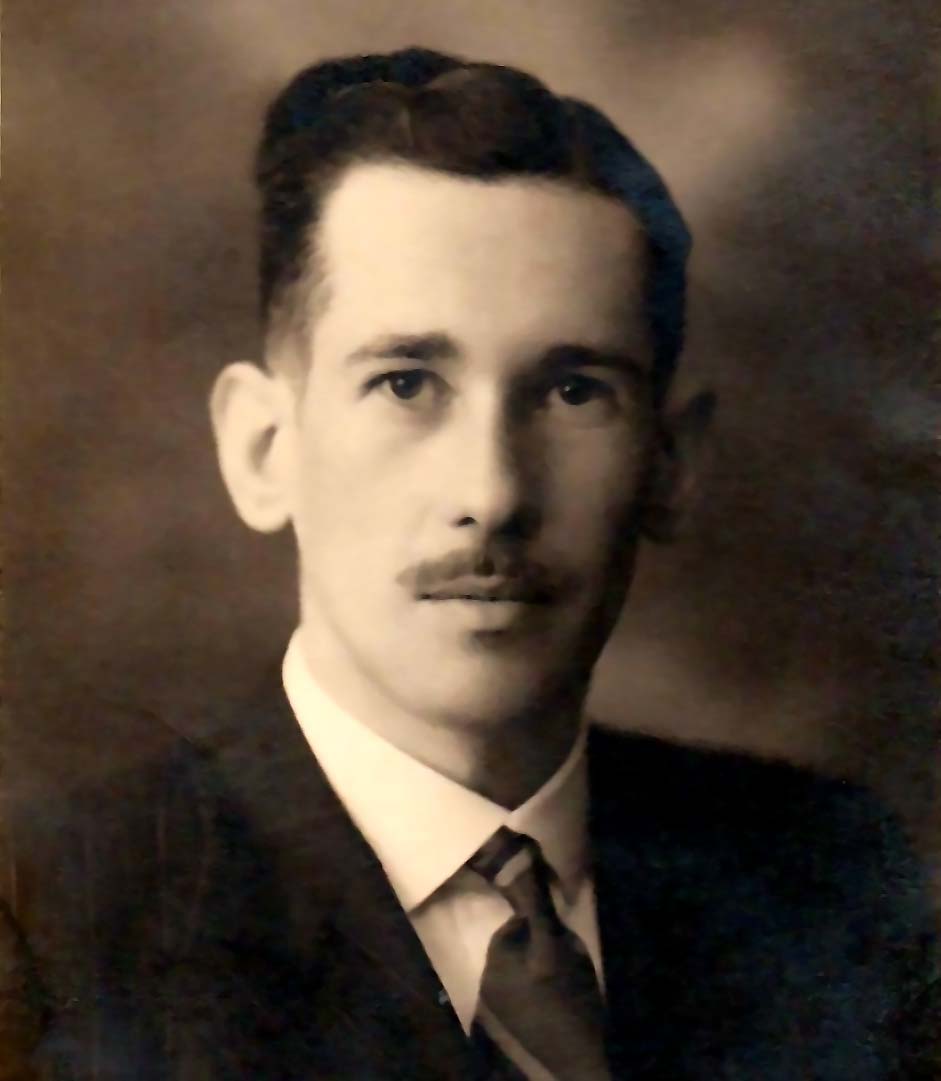
H.C. Snelson 2

Parents
| Father | Captain Harold Alfred Benyon Snelson (b. 15 March 1883, d. 3 October 1955) |
| Mother | Nessie Pierce (b. 19 January 1884, d. 20 February 1960) |
Family: Irene Nettacress Roby (b. 5 January 1913, d. January 1984)
| Son | Peter Colin Snelson (b. 27 September 1942, d. 4 July 2015) |
Main Events
| Reference Number | Harold Cecil Snelson had reference number 25. |
| User Reference Number | He; 25 |
| Religious Affiliation | He was affiliated with Church of England. |
| Occupation | He was a Hospital Secretary. |
| Note | Event Memos from GEDCOM Import... Anecdote Here's an extract from the West Derby Reporter, Friday 29th March 1963, taken from an article reporting a talk given by Councillor A L AUDLEY to the West Derby Conservative Association 'ladies'. There are few dull moments in the life of a fireman in Liverpool. The varied character of the city's buildings, the many different industries, and the part Liverpool plays as a great seaport - all present their special challenge to the Fire Service, both in firefighting and fire prevention.......... Liverpool Fire Service was under Liverpool Corporation , and was formed on 1st April 1948, when the National Fire Service was disbanded. prior to the formation of the national Fire Service in 1941, the Liverpool Fire Brigade was part of the City Police Force, and had been in existence since 1836. There were 12 fire stations in various parts of the city. In addition, the service maintained the fireboat William Gregson (309 gross tons), the crew of which consisted of firemen with sea going experience. Speaking of the early history of the Liverpool Fire Service, Coun. Audley said records went back as far as 1550, when the Mayor and Council ordered that gorse stacks were not to be erected near houses. In 1582, the Town Clerk was fined 4d for keeping "fire in his chamber" - being a place unfit for the purpose, and a dangerous thing. In 1629, a bellman was appointed to patrol the streets, warning citizens of fire danger by ringing his bell. Almost a century later, in 1718, three fire engines were provided for the town, with three dozen leather buckets supplied at the expense of the local authorities. The first case of arson was recorded in 1730, and three years later the first fire engine bought with municipal funds was put into service. A disastrous fire occurred at the Town Hall in 1795 "causing great consternation, trouble and loss to the council" Then in 1802, the Goree warehouse was burned down, the damage amounting to £323,000. The ruins continued to smoulder for over three months. In 1824, the premises of Duncan and Sons, rope makers, in Brownlow Hill, were set on fire by Sylvester THORNTON, a youth of 15. He was transported for seven years. Eighteen years later, in 1842, a great fire involved Crompton Street, Formby Street and Neptune Street. One fireman and three labourers lost their lives, and the damage was £500,000. A fire chemical engine was bought from USA in 1896, and in 1902 the first petrol-driven engine was purchased, but found to be unreliable. The year 1911 was marked by a big fire and explosion at J Bibby and Company's premises. Thirty-six people were killed and 100 injured. By 1916, horses were finally disbanded in the brigade. Before the last war, in 1938, the strength of the Liverpool Police Fire Brigade totalled 186 officers and men, a total progressively increased from 120 in 1921. During this period, the self-propelled steam motors were replaced by 1,000 gallons-a-minute modern petrol motor fire pumps carrying a 50 ft fire escape. In the early part of 1940, the strength of the brigade was further increased by selected members of the Auxiliary Fire Service, who later shared the brunt of enemy attacks. By the end of 1940, a total of 2,640 officers and men were available to the Fire Brigade, manning 400 large, medium and small pumps. More than 40 members of the Liverpool fire services lost their lives through enemy action between September 1939 and August 1941. Thirty-four members of Liverpool Fire Brigade and the AFS received decorations and awards, including George Medals. The first relatively big attack on the city occurred on 17th August 1940, and was followed by a period of almost continuous raiding until the end of November. On 21st August, the service attended over 100 fires, the most serious being at the Customs House and a number of cotton warehouses. On 17th September, eight auxiliary firemen lost their lives when their station in the Old Swan received a direct hit. On the nights 20th/22nd December, there was as many as 500 fires. the seven consecutive night of attack at the beginning of May, 1941, fully extended the service, the worst night being the 3rd and 4th May, during which there were 400 fires. An ammunition ship in the docks was set ablaze and blew up. The Fire Services Act of 1947, which brought the National Fire Service to an end, came into operation on 1st April, 1948, and places on fire authorities the duty to make provision for fire-fighting. Councillor Audley said an interesting fact was that in 1858, the cost of the brigade was £1,925.12s. 5d. while in 1952 the sum was £666,275 9s. 11d - charged to the rates. |
| Birth | He was born on 22 November 1911 in Isle of Wight, England, Alma Cottage, Silcomb Lane, Colwell Bay, Totland Bay, Freshwater.1 |
| Residence | He resided in Victoria Road, Chester, in May 1917.2 |
| Residence | He resided in Fairfield, Liverpool, in 1933 Address: 33 Prospect Vale, Liverpool 6. |
| Marriage | Harold Cecil Snelson and Irene Nettacress Roby were married on 2 April 1938 in St. John the Divine, Fairfield, Liverpool, They were married at the church of St. John the Divine, Fairfield, Liverpool on Saturday 2nd April 1938 at 2-00 PM. The reception was held afterwards at the Francis Cafe, Parker Street, Liverpool ( I have one of the original invitations ). I see that the Witnesses were Best Man George Leslie ("Les") Young and the Bride's Maid was Doris C Jones - I think this must be the future wife of George Scardifield, draughtsman who worked at Saunders Row, Cowes, Isle of Wight. Doris and My Mum Rene Roby were best friends.3,4 |
| Residence | He resided in 112 Bowring Park Avenue in 1939 Address: Liverpool 16 where he lived until his death in 1975 ... and this was my home too until I left to go to London in January, 1969. |
| Occupation | He was Building Society Clerk - Cashier in Huyton With Roby, Liverpool 16, on 29 September 1939.5 |
| Occupation | He was a fireman in the Auxiliary Fire Service on the docks in Liverpool between 1940 and 1945. |
| His son Peter Colin Snelson was born on 27 September 1942 in the Hospital, Broadgreen, Liverpool, England. | |
| His father Captain Harold Alfred Benyon Snelson died on 3 October 1955 in 131 Bowring Park Avenue, Bowring Park, Liverpool 16, England. | |
| Occupation | Harold Cecil Snelson was a Hospital Secretary in Rainhill Hospital, Rainhill, about 1959. |
| His mother Nessie Pierce died on 20 February 1960 in the Hospital, Broadgreen, Liverpool, England. | |
| Occupation | He was the hospital secretary in the TB hospital where I was employed myself during school holidays as a lowly orderly, trolley pusher and "useful" .., the Hospital Secretary in the TB hospital where I was employed myself during school holidays as a lowly orderly, trolley pusher and "useful" . in Barrowmore Sanitarium, Chester, in 1961. |
| Occupation | He was the hospital secretary in Deva Hospital, Chester, about 1965. |
| Cause of Death | The cause of death was lung cancer. |
| Death | He died on 30 September 1975, at age 63, in Huyton-with-Roby, Liverpool 16, England, Address: 112 Bowring Park Avenue Birth date is given in Death entry as 22 11 1911. Dad was a smoker all his adult life.6 |
| Cremation | The remains of Harold Cecil Snelson were cremated on 3 October 1975 in West Derby Address: the Crematorium. |
| His wife Irene Nettacress Roby died in January 1984 in Cheshire, England. | |
| Biography | Let's call him "Harold of Liverpool". My Dad was born I think in the Isle of Wight but was brought up in Chester. He started school on 1st May 1917 at Victoria Road Infants School, possibly being transferred to another school on 27 April 1919 when his father was a soldier in the First World War. This could have been to the Isle of Wight. He was Hospital Secretary at a variety of hospitals during the period 1955 - 1970, including ( in order ) Rainhill ( between Liverpool and St. Helen's ), Barrowmore Sanitarium ( near Chester ) and Deva. During the Second World War, Dad was a fireman working on the docks in Liverpool. This was pretty rough, as the waterfront was heavily bombed by the Germans nearly every night for several years. Amongst his other claims to fame and poverty, he was an excellent sportsman, playing quality tennis and badminton as well as being a top soccer player, appearing in goal for Everton "A" team on at least three occasions in the 1930's. Like his father ( and now his son Peter ), he was a Freemason and member of Lodge Fairfield, No. 2290. On the 18 September 1967 he was made a Past Provincial Grand Deacon ( Junior ), and on 23 April 1975, he became Past Provincial Grand Warden ( Junior ) of the West Lancashire Provincial Grand Lodge. He was a member of the Chapter and Rose Croix. I was delighted to sit in January 1990 with my brother Peter, a MM , in the Lodge of my father and my grandfather amongst many of their friends and people who remembered both of them - many of them sons and grandsons of my fathers and his fathers peers. This for me, was a moving and very special occasion. I ceased being a freemason shortly afterwards for my own reasons. |
| Reference | In 1996 Old reference Number SNELHC11. |
Census
| Label and Year | Manual |
|---|---|
| Census 1921 | Harold Cecil Snelson Id #9,188 (Principal) was at home on Census night 1921 at Lancashire; Address: 30 Mersey View, Brighton Le Sands [[Witness Role: son]] Original Documents, Source and Citations here7 |
| Census | Harold Cecil Snelson Id #9,188 (Principal) was at home on Census night between 1935 and 1936 at Fairfield, Liverpool, England; Address: 5 Elstree Road Witness Role: resident Original Documents, Source and Citations here |
| Census 1939 | Harold Cecil Snelson Id #9,188 (Principal) was at home on Census night 1939 at Huyton With Roby, Liverpool 16; Address: 112 Bowring Park Avenue Source 5994 Census 1939 Huyton With Roby, Liverpool 16 RG101 (RG101/4791C/009/27 Letter Code: NVGO), (RG101). Principal Role Witness Role: Head of Household Principal Role Original Documents, Source and Citations here |
Citations
- [S1454] Births Index (CR) England, Isle of Wight. Q 4 1911. SNELSON, Harold C. V. 2b. PN. 1140. http://www.ancestry.co.uk: accessed January 20 2001.
- [S114] Victoria Road Infants School Records 1871 - 1927
- [S1461] Marriages (PR) England, Fairfield, Liverpool. 2 April 1938. SNELSON, Harold Cecil. Bachelor. 26. Clerk. & ROBY, Irene Nettacress. 25 Domestic Duties. P. 51/101. : http://www.ancestry.co.uk
- [S1855] Marriages (CR) England, Liverpool N. Q2. 1938. SNELSON, Harold C & ROBY. V. 8b. P. 765 : http://www.ancestry.co.uk
- [S1417] Census 1939 Huyton With Roby, Liverpool 16 RG101 (RG101/4791C/009/27 Letter Code: NVGO)
- [S1458] Deaths index (CR) England & Wales, 1975 Q.4. SNELSON, Harold Cecil. RD. Knowsley, Lancashire. V. 2b. P. 0167. : http://www.ancestry.co.uk
- [S724] Census Records, England, Brighton-le-Sands, Waterloo, Lancashire. 19 June 1921. SNELSON, Harold Alfred Benyon (head). RD 455. ED 21. S 102. STC E. http://www.ancestry.uk : accessed 01 April 2025.
Joyce Sharp
F, #9191, Living
Interactive Pedigree Button
| Relationship | 3rd cousin of Adrian John Snelson |
Robert Clotton1
M, #9196, Deceased, b. about 1245, d. 1297
Interactive Pedigree Button
Parents
| Father | Robert Clotton (b. about 1215, d. about 1245) |
| Mother | Unknown Waverton (b. about 1225) |
Family: Petronilla Unknown (b. about 1265, d. about 1315)
| Son | William Clotton+ (b. about 1258, d. about 1340) |
Main Events
| Birth | Robert Clotton was born Person Source, Y.2 |
| Marriage | Robert Clotton and Petronilla Unknown were married.1 |
| User Reference Number | He; 19062 |
| Birth | He was born about 1245.1 |
| His father Robert Clotton died about 1245. | |
| His son William Clotton was born about 1258. | |
| Death | Robert Clotton died in 1297, at age ~52.1 |
| His wife Petronilla Unknown died about 1315. |