A Snelson DataBase and Index
Includes the Snelson Coat of Arms & Armory
Person Page 906
 |  |  |  |
William I Unknown1,2,3
M, #22630, Deceased, b. about 950, d. 993
Interactive Pedigree Button
Parents
| Father | Boso II Unknown (d. about 966) |
| Mother | Constance Unknown |
Family 1: Arsenda Unknown
Family 2: Adelaide (Blanche) Unknown (b. about 948, d. 1012)
| Daughter | Constance Unknown+ (b. 973, d. 25 July 1034) |
Main Events
| Marriage | William I Unknown and Arsenda Unknown were married.3,1 |
| User Reference Number | He; 18706 |
| Residence | He resided William I (c. 950 – 993, after 29 August), called the Liberator, was Count of Provence from 968 to his abdication. In 975 or 979, he took the title of marchio or margrave. He is often considered the founder of the county of Provence. He and his elder brother Rotbold II, sons of Boso II of Arles, both carried the title of comes or count concurrently, but it is unknown if they were joint-counts of the whole of Provence or if the region was divided. His brother never bore any other title than count so long as William lived, so the latter seems to have attained a certain supremacy. In 980, he was installed as Count of Arles. His sobriquet comes from his victories against the Saracens by which he liberated Provence from their threat, which had been constant since the establishment of a base at Fraxinet. At the Battle of Tourtour in 973, with the assistance of the counts of the High Alps and the viscounts of Marseille and Fos, he definitively routed the Saracens, chasing them forever from Provence. He reorganised the region east of the Rhône, which he conquered from the Saracens and which had been given him as a gift from King Conrad of Burgundy. Also by royal consent, he and his descendants controlled the fisc in Provence. With the Isarn, Bishop of Grenoble, he repopulated the Dauphiny and settled an Italian count named Ugo Blavia near Fréjus in 970 in order to bring that land back to cultivation. For all this, he figures prominently in Ralph Glaber's chronicle with the title of dux and he appears in a charter of 992 as pater patriae. He donated land to Cluny and retired to become a monk, dying at Avignon, where he was buried in the church of Saint-Croix at Sarrians. He was succeeded as margrave by his brother. His great principality began to diminish soon after his death as the castles of his vassals, which he had kept carefully under ducal control, soon became allods of their possessors. He married 1st Arsenda, daughter of Arnold of Comminges and their son was William II of Provence. He married 2nd (against papal advice) in 984, Adelaide of Anjou, daughter of Fulk II of Anjou and Gerberga of Maine, and their daughter was Constance of Arles (973 - 1034) who married Robert II of France.1 |
| His wife Arsenda Unknown died. | |
| Birth | He was born about 950.3,1 |
| His father Boso II Unknown died about 966. | |
| His daughter Constance Unknown was born in 973 in Toulouse, France. | |
| Marriage | William I Unknown and Adelaide (Blanche) Unknown were married in 984.2,1 |
| Death | He died in 993, at age ~43.3,1 |
| His wife Adelaide (Blanche) Unknown died in 1012. |
Citations
Jean Thompson
F, #22631, Deceased, b. 1932, d. 2015
Interactive Pedigree Button
Parents
| Mother | Eugenie Millington (b. 1908, d. 1996) |
Family: Robin D'arcy (d. 1984)
| Relationship | Partner of Robin D'arcy (4th cousin 2 times removed of Adrian John Snelson) |
| Person References | Descendents of William Snelson c.1670 William Snelston bef 1668 - aft 1707 |
| Last Edited | 19 November 2025 |
Main Events
| Marriage | Jean Thompson and Robin D'arcy were married. |
| User Reference Number | She; 23838 |
| Birth | She was born in 1932 was born <()> <()>. |
| Her husband Robin D'arcy died in 1984. | |
| Her mother Eugenie Millington died in 1996. | |
| Death | Jean Thompson died in 2015, at age ~83. |
William Snelson1
M, #22632, Deceased, b. about 1486
Interactive Pedigree Button
Person Exhibits - click on camera icons
Snelstonmg4
Parents
| Father | John Snelston (b. about 1455) |
Family: Margery Saunders (b. 1486)
| Son | Robert Sneston |
| Son | Jeremiah Sneston |
| Daughter | Jane Sneston |
| Son | John Snelston+ (b. about 1516) |
Main Events
| Marriage | William Snelson and Margery Saunders were married.1,2 |
| User Reference Number | He; 4957 |
| Biography | See notes. |
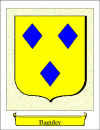
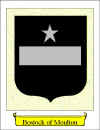
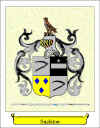
| Note | Event Memos from GEDCOM Import... Biography The date of birth for William Snelston who married Marjorie Saunders has been calculated based on 30 years per generation - going back from an estimated date of birth for Roger the dyer and assuming that the dotted line in the Visitation of London does not imply missed generations. If we look at the Visitation of Gloucester 1623 for Cotton, you will see that Margaret Snelston [6717] was the heire of Thomas Snelston, and if we move up at 30 years per generation from her grandson ( Richard Cotton [6729])'s date of birth, we would arrive at a birth year for Margaret at circa 1515. Going back from here, we must assume that her father Thomas Snelston [6716] had no surviving male children as daughter Margaret was his heire. At 30 years a generation, puts Thomas at a birth year of circa 1485. The ONLY earlier, entitled ancestor left who could possibly show legitimately the arms of Baguley, Bostock and Snelson, marshalled in a single achievement, then must be Thomas's father, John Snelston [6715]. At another 30 years a generation, this means that we have estimated a year of birth for this John Snelston at the year 1455. John's father Thomas Snelston [5290] who married Issabel Bostock [5291], would only be entitled to show the Bostock arms on his shield as an escutcheon of pretence, however their children (ie John Snelston born circa 1455 and his descendants) would be entitled to quarter the arms of the mother Issabel Bostock. As Issabel [5291] was an heraldic heiress, she could show her father's arms legitimately with Baguley and Bostock, as her grandmother an Unknown Baguley [23267] was a Baguley heiress. Therefore, all other things being equal, John Snelston [6715] born circa 1455 is Roger the dyer's direct ancestor. I have separately calculated William Snelston's birth year using the same 30 year rule per generation to circa 1486. This is only 1 year different from the independently calculated year of birth for Thomas Snelston [6716], an armiger whose heire was Margaret Snelston who was born circa 1515-1530. It all fits too easily, but it is all we have to go on. The case might be more coincidental than robust. However, I am assuming from here that William Snelston [4957] who married Margery Saunders [6956] was the son of John Snelston [6715], grandson of David Bostock [6714], armiger and great-great grandson of Sir William Baguley [6711], armiger and that this is how the three arms came to be quartered together on the Macclesfield Chalice. Accordingly, without hard proof, and on the logic of this argument, I have inferred or assumed in good faith the linkage between William Snelson [4957] ( born circa 1486 ) and his deducted parent, John Snelston [6715] ( born circa 1455 ). The latter John Snelston's parents were Thomas Snelston [5290] and Issabel Bostock [5291], great grand daughter and heire of Sir William Baguley. This seems crazy, but I tried it - just as a sanity check. I applied this theory of 30 years per generation to Roger the dyer's antecedents as described above, and followed them back in a straight line all the way to Osmer Bostock [6742] who we know was around in 1066. He is referred to in the Visitation of Cheshire 1580, which in turn points to an earlier Sir Gilbert Bostock [6741], who appears to be associated with Warin de Vernon [6748] and Martini Banester. None of these names appear in "My Ancestors Came with the Conqueror" by Anthony Camp, although there are several Vernon references. Some sources refer to Osmer as "Sir Osmer". He is more likely to have been a thegn or thane, an Anglo-Saxon title (Anglo-Saxon: þeg(e)n, Danish: degn, Old High German: degan, Old Norse: thegn or "king's follower") meaning an attendant, servant, retainer or official, usually in a military sense similar to the later "knight." The date calculated as an approximate date of birth for Osmer Bostock [6742] at 30 years per generation, going back from Richard Cotton [6729] who we know was 19 years old in 1589 is the year 995 AD !!! Isn't that amazing. I think this means that whilst we might be out perhaps as much as 25 years in each generation, over a period crossing many hundreds of years, perhaps SIX HUNDRED YEARS and some 20 generations, the integrity of the guesstimate stands up. It is possible that Osmer Bostock was aged 71 at the time of the Battle of Hastings, if indeed he was there. I wonder why he is referred to in the Visitation of Cheshire 1580 if he wasn't a defender in the Conquest ? His lands evidently were granted to Richard de Vernon, Baron of Shipbrook, one of the invaders mentioned in the Battle Abbey Roll along with Hugh and Walter de Vernon, presumably his relatives. This does not mean he was actually at the Battle. So what ? Well, I think this all lends support for the date estimates for the relationship between Roger Snelson [6878] the dyer and donor between the years 1624-1634 of the Macclesfield Chalice, the heiress Margaret Snelston [6717] (who married Richard Cotton ) circa 1540, the heiress Isabel Bostock [5291] (who married Thomas Snelston [5290]) around about 1450, and the heiress [23267] of Sir William Baguley who married David de Bostock some time close to the year 1390. At least, that's the way I see it. |
| Birth | He was born about 1486. |
| His son John Snelston was born about 1516. |
Citations
Evrard Unknown1,2
M, #22639, Deceased, b. 819, d. 16 December 867
Interactive Pedigree Button
Family: Gisela Unknown (b. 821, d. 1 July 874)
| Daughter | Judith Unknown+ |
| Daughter | Ingeltrude Unknown+ (b. about 837, d. 870) |
| Son | Berengar I Unknown+ (b. about 840, d. 7 April 924) |
Main Events
| User Reference Number | Evrard Unknown; 18581 |
| Residence | He resided See notes.1 |
| Note | Event Memos from GEDCOM Import... Residence Saint Evrard was a soldier in the court of Charlemagne - he was instrumental in the politics of the day. He resided near present-day Lille, France (Cysoing is a village of Lille metro), and was Duke of Frioul (Italian: Friuli, French: Frioul) from 846 to 863 (he inherited the title from his father). He had a relationship with the theologian Gottschalk. Other known associates included Raban Maur, Archbishop Hincmar of Reims, and Sedulius Scottus. An alternative spelling of this name is 'Erhard'. Also 'Everardus' 'Eberardus' 'Eberard' 'Eberhardus' 'Eberhard'. He wrote his own name 'EWRARDUS'. He died 16 December 867. His feast day is 16 December. Evrard was from an illustrious Frankish family. Children (with Princess Gisèle): * Eberhard (c.837 – 840) * Ingeltrude (837 or 840 – 870), probably married Henry of Franconia * Unruoch III (c.840 – 874) * Bèrenger (c.840 – 924), King of Italy * Adélard (d.874) * Rudolf (d.892) * Heilwig (d. 895) * Gisèle (d.863) * Judith, first married Arnulf I of Bavaria, second married Conrad II of Auxerre Eberhard's brother was Berengar the Wise. Father: Theory 1: His father was Unruoch II. Theory 2a: 'His father was Bèrenger, the son of Count Unroch.' Theory 2b: 'After other authors, Unroch, the grandfather of Saint Evrard, should have been the Duke of Frioul.' Theory 3: 'Alas, some have written that Saint Evrard had for his father Carloman, the brother of Charlemagne.' His mother was Engeltron of Paris, a daughter of Begue, Count of Paris and Aupals. 'As for his mother, she was, Buzelin says, the daughter of Didier, king of the Lombards.' 'His grandfather was, it is said, the Count Unroch who was leaving the court of Charlemagne and signatory to the will of the emperor.' Saint Evrard lived in the ninth century. He was born under the reign of Charlemagne and died under that of Charles the Bald. Saint Evrard was elevated to the court of Charlemagne and of Louis the Débonaire. He took his education at the Palace School founded by Charlemagne and organized by Alcuin, where he studied from the medieval programs known as the trivium and the quadrivium. There he got a taste of the letters and sciences, at the same time that he developed his famous piety. It is without doubt that it was at the Palace School that Saint Evrard began to build the rich library of which he enumerates the books with so much care in his will. As soon as his age permitted him to carry arms, Saint Evrard took part in numerous military expeditions. Named Duke of Frioul and Count or Marquis de Trévise, in Italy, he defended his country against invasion by the Bulgars and managed to completely drive these new barbarians from the peninsula (825-830). He rendered service unto Louis le Débonaire that was still more distinguished. During the tragic years (830-839) where the emperor had suffered at the hand of his son's revolt the most indignified treatment, Count Evrard remained inviolably loyal. He exercised his influence in Lothair's sphere (the elder son of the emperor) to bring about a reconciliation between father and son. It is certain that it was on his council in 839, that Lothaire went to Worms to implore the pardon of his father. In return for his services, the emperor Louis le Débonaire gave Count Evrard the highest honor possible: the hand of his (aknowledged) daughter, the Princess Gisèle, in marriage. The Princess Gisèle, a woman of piety and virtue, was the daughter of Louis le Débonaire and his second wife, the empress Judith. Among the rich domains the Princess brought with her in her dowry, Count Evrard found the fisc of Cysoing. One gives the name fisc, in this age, to large, rural properties separate from the royal domains; that is, to sorts of farms with a residence for the master and homes for settlers. The Royal Fisc of Cysoing, situated at the center of the country of Pèvele, was one of the most beautiful in the region. The stay seemed so agreeable to Saint Evrard and the Princess Gisèle that they made it one of their regular residences. The castle which they inhabited was without doubt the same as that of the lords of Cysoing in following centuries. It found itself part of a magnificent property, surrounded by water, that actually belongs to the family Bigo-Vanderhagen. The farming ditches were marked in the oldest documents. It is not rash to think these were dug in Saint Evrard's time, or perhaps even earlier. Already, in the century before (in 752), the little hamlet established on the royal fisc of Cysoing has been made famous through the martyrdom of Saint Arnoul. Saint Arnoul, a courageous warrior, who was, it is said, the father of Godefroid, Bishop of Cambrai and Arras, had been attached to the court of a noble lord, his relative. 'His virtues and his merits were so radiant that God accorded his prayers more than one miracle during his life. He became even more glorious through his martyrdom.' He was so devoted to his master that he eventually died for him thus attaining martyrdom. Saint Arnoul was already honored at Cysoing when Saint Evrard and Princess Gisèle went to take possession of their domain. His relics were conserved there. Cysoing, of this age, has therefore a church, or less a chappel that was without doubt the same chappel as the royal fisc. Saint Evrard, at Cysoing, had a chaplain named Walgaire. They (Evrard and Gisèle) decided to found a monastery at Cysoing. The project was long and difficult, and was not complete at the time of Evrard's or Gisèle's deaths. The monastery was initially made in honor of Saint Saveur and Mary (mother of Jesus, not Magdalene). The religious lived there under canon law in a community with all the rigors of the cloister. Their special function was singing solemnly in the church. They maintained public prayer. Saint Evrard was known to enjoy singing with the choir. After his later campaigns in the defense of Italy, the remains of Pope Callixtus I were reinterred in the Abbey at Cysoing. Saint Evrard, himself, has organized his home in a way so perfectly that it was more like a monastery than a castle. He was seconded in this task by his pious wife, Gisèle, who dedicated herself to the education of their many children. The poor and ill were sure of finding not only banal security at Cysoing, but also help and protection. The social question of the time, that of serfs, also preoccupied Saint Evrard. He had freed a good number. In their testimony, he expressly refrained from impeding their liberty. He never forgot those who he didn't free, and tried to improve their lots. Though he was a courageous and formidable, he worked all his life for peace. His private vertues were no less remarkable. In his elevated position, he strove to preserve modisty and humility, to avoid spleandour and arrogance. His zeal for the glory of God, to spread the Truth, to convert the infidels, was celebrated throughout the Church. Alas, his piety, his taste for ceremonies of worship, he devotion to the saints, his respect for the precious relics was apparent in his every act. Saint Evrard's activity was not limited to the royal fisc of Cysoing, as he involved himself freely with matters of other domaines and the empire in general. Emperor Louis the Debonaire went to die (840) and the war, a cruel war without mercy, exploded between the Emperor Lothaire and his two brothers, Louis le Germanique and Charles the Bald. Saint Evrard strongly deplored this fighting/battling and fratricide and made all efforts to bring it to an end. After the bloody battle of Fontenay (25 June 841), he left the ambassadorial envoy of Lothaire near that of Lothaire's brothers for peace negotiations. The preparatory conference took place in 842 at Milin, near Châlons in Champagne. It was decided to divide the empire between the three brothers. The negotiators, among which Evrard could be found, were charged with making the partitioning equitable/fair. It was not before August of 843 that they presented their report to the three kings at Verdun. The negotiations ended and peace was re-established between the three brothers, Saint Evrard left in haste for Italy. Italy was being ravaged by African Saracens. These barbarians had been named as helpers, in 842, by the Duke of Bénévent and they would soon become dangerous enemies for the entire peninsula. They menaced Rome and pillaged it many times. Saint Evrard, in his station as Duke of Frioul, was made a captain/leader of the resistance. The war wore on for several years and ended in 851 with the defeat of the Saracens. Evrard has a reputation for being both a courageous soldier and able leader throughout these battles. In the tradition of Charlemagne, Evrard forced the vainquished to convert to Christianity, meritoriously (for the time and his contemporaries) teaching them the Gospel, himself. Sometime after this solemnity, Saint Evrard returned to Italy. We find him in 858 among the ambassadors who the emperor Louis le Jeune, son of Lothaire, sent to Ulm, near his uncle Louis le Germanique. After this date, we know nothing more about Saint Evrard until his Testimony, a very interesting/curious/strange document, whose authenticity is certain and in which we are given information on the life of Saint Evrard... This Testimony was made in Italy, at Musiestro Castle, in the county of Trévise, in 867. With the agreement of his spouse, Princess Gisèle, Saint Evrard portioned his goods among his seven children. The eldest, Unroch, got all properties in Lombardy and Germany. the second, Bèrenger, got Annappes with its dedepencencies less Gruson and the other properties in the Hesbaye and in the Condrost. The third, Adélard, got the lands of Cysoing, Camphin, Gruson and Somain, with charges and respects of all the properties of the Abbey in these regions. The fourth, Rodolphe, got Vitry-en-Artois and Mestucha, except for the church at Vitry which was given with the Abbey at Cysoing. The three daughters of Saint Evrard, Ingletrude, Judith and Heilwich, got various other domains : Ermen, Marshem, Balghingham, Heliwsheim, Hostrenheim, Luisinga, Wendossa, Engerresteim. Saint Evrard had another daughter who carried the name of Gisèle, her mother. But she was dead at the time of his testimony. The testimony split equally the jewels and ornaments of the saint, the precious objects of his chappel and the books of his library. It is dated 867, the 28th year of the reign of Lothaire's son, Louis le Jeune. Saint Evrard died the same year, 16 December. |
| Birth Reg | He; Gisela Unknown; half 1 cousins 1 removed1 |
| Birth | He was born in 819.2,1 |
| Marriage | Evrard Unknown and Gisela Unknown were married about 836.2,1 |
| His daughter Ingeltrude Unknown was born about 837. | |
| His son Berengar I Unknown was born about 840. | |
| Death | Evrard Unknown died on 16 December 867, at age ~48.2,1 |
| His wife Gisela Unknown died on 1 July 874. |
Citations
George Rawlings
M, #22640, Deceased, b. about 1850
Interactive Pedigree Button
Family: Bridget Unknown (b. about 1851)
| Daughter | Louisa Amelia M. Rawlings+ (b. 5 December 1882) |
Main Events
| Marriage | George Rawlings and Bridget Unknown were married. |
| User Reference Number | He; 23709 |
| Occupation | He was a greengrocer. |
| Birth | He was born about 1850 in Bristol. |
| His daughter Louisa Amelia M. Rawlings was born on 5 December 1882 in St. Saviour, Southwark, London, England. |
Ykenai Unknown1,2
F, #22648, Deceased, b. about 1131
Interactive Pedigree Button
Family: Henry II Curmantle Unknown (b. 5 March 1133, d. 11 June 1183)
Main Events
| Also Known As | Ykenai Unknown was also known as Ykenai Unknown. |
| Marriage | Ykenai Unknown and Henry II Curmantle Unknown were married Unknown GEDCOM info: Mistress Unknown GEDCOM info: had a child with Unknown GEDCOM info: Mistress Unknown GEDCOM info: had a child with.3,1 |
| Death | She died Y Y, Y.1 |
| User Reference Number | She; 18436 |
| Birth | She was born about 1131.1 |
| Her husband Henry II Curmantle Unknown died on 11 June 1183 in Chinon, Centre, France. |
Citations
Robert Dugdale1
M, #22650, Deceased, b. about 1617
Interactive Pedigree Button
Parents
| Father | Robert Dugdale (d. about 1641) |
| Mother | Alice Snelston (d. about 1648) |
Main Events
| User Reference Number | Robert Dugdale; 4665 |
| Birth | He was born about 1617. |
| Education | He was educated between 1628 and 1632 Address: Merchant Taylors School. |
| Apprentice | He; between 1634 and 1635; to a Merchant Tailor |
| His father Robert Dugdale died about 1641. | |
| His mother Alice Snelston died about 1648. |
Citations
- [S365] Visitation of London 1633/34 College of Arms Ms 2c 24/354