A Snelson DataBase and Index
Includes the Snelson Coat of Arms & Armory
Person Page 682
 |  |  |  |
Edmund Eric Howard
M, #17028, Deceased
Interactive Pedigree Button
Family: Ruby Evelyn Diamond (b. 1898)
| Relationship | Partner of Ruby Evelyn Diamond (3rd cousin 1 time removed of Adrian John Snelson) |
| Person References | Descendents of William Snelson c.1670 William Snelston bef 1668 - aft 1707 |
Main Events
| User Reference Number | Edmund Eric Howard; 742 |
| Marriage | Edmund Eric Howard and Ruby Evelyn Diamond were married in 1925 in St. Catherine, Tranmere, DIAMOND Ruby Evelyn HOWARD Edmund Eric Tranmere, St Catherine Wirral BK16/6/153[:UND]. |
Jane Mason
F, #17037, Deceased, b. about 1831
Interactive Pedigree Button
Parents
| Father | Edward Mason (b. 1798, d. 1870) |
| Mother | Jane Rubbathan (b. about November 1800) |
| Relationship | 1st cousin 3 times removed of Adrian John Snelson |
| Person References | Edward Mason 1771 - 1841 Margaret Swain say 1778 |
Main Events
| User Reference Number | Jane Mason; 24946 |
| Birth | She was born about 1831. |
| Her father Edward Mason died in 1870. |
Annie Helena ("Nell") Kent
F, #17038, Deceased, b. 11 June 1900, d. October 1980
Interactive Pedigree Button
Person Exhibits - click on camera icons
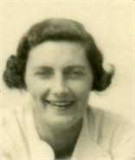
Annie Helena Kent
Parents
| Father | Thomas Kent (b. 22 August 1874, d. 17 April 1949) |
| Mother | Sarah Ann Wetton (b. about 1877, d. 15 August 1965) |
Family: John Mason-Pierce (b. 24 July 1889, d. 12 December 1973)
| Daughter | Stella Rosemary Pierce (b. 25 September 1928, d. 25 May 2010) |
| Relationship | Partner of John Mason-Pierce (great-uncle of Adrian John Snelson) |
Main Events
| Also Known As | Annie Helena ("Nell") Kent was also known as Annie Helena ("Nell") Mason-Pierce. |
| User Reference Number | She; 616 |
| Birth | She was born on 11 June 1900 in Tean, Stoke on Trent, Staffordshire, England. |
| Marriage | Annie Helena ("Nell") Kent and John Mason-Pierce were married in 1922 in Utoxeter. |
| Her daughter Stella Rosemary Pierce was born on 25 September 1928 in Derby, England. | |
| Her father Thomas Kent died on 17 April 1949 in Checkley, Staffordshire. | |
| Her mother Sarah Ann Wetton died on 15 August 1965 in Ellastone, Staffordshire. | |
| Her husband John Mason-Pierce died on 12 December 1973 in Sturminster, Castleton, Sherborne, Dorset, England. | |
| Residence | Annie Helena ("Nell") Kent resided in 1980 Address: Middle House, Castleton. |
| Death | She died in October 1980, at age 80. |
| Burial | Annie Helena ("Nell")'s remains were buried on 16 October 1980 in Castleton, Dorset. |
Alexandra Catherine Eleanor Sargant-Lane
F, #17042, Living
Interactive Pedigree Button
| Relationship | 4th cousin 1 time removed of Adrian John Snelson |
Bathild Unknown1,2
F, #17046, Deceased, b. about 626, d. 30 January 680
Interactive Pedigree Button
Family: Clovis II Unknown (b. 637, d. about 657)
| Son | Theuderic III Unknown+ (b. 654, d. 691) |
Main Events
| Also Known As | Bathild Unknown was also known as Bathild Unknown. |
| Marriage | Bathild Unknown and Clovis II Unknown were married.2,1 |
| User Reference Number | She; 19653 |
| Residence | She resided See notes.1 |
| Note | Event Memos from GEDCOM Import... Residence Saint Balthild, also known as Bathilde d'Ascagnie, Batilde, Bathylle, Bathild, Bathildis, or Bathilda (626 or 627 – January 30, 680), was the wife and queen of Clovis II, king of Burgundy and Neustria (639 – 658). Her name comes from the Old English and means 'bold battle'. Two traditions, independent and conflicting, trace her career. One is a hagiography which was intended to further her successful candidature for sainthood. The other is a record of chroniclers, confirmed by a chance archaeological find in an East Anglian field. Both traditions represent her as an Anglo-Saxon of elite birth, perhaps a relative of King Ricberht of East Anglia, the last pagan king there. Ricberht was ousted by his Christian rival Sigeberht, who had spent time in the Frankish court. He was established as the rightful heir to the throne with Frankish help. Balthild was sold into slavery as a young girl and served in the household of Erchinoald, mayor of the palace of Neustria to Clovis. According to Vita S. Bathildis, Balthild was beautiful, intelligent, modest, and attentive to the needs of others. Erchinoald (whose wife had died) was attracted to Balthild and wanted to marry her, but she did not want to marry him. She hid herself away and waited until Erchinoald remarried. Next, King Clovis noticed her and, sometime in 649, asked for her hand in marriage. Balthild was nineteen when she became queen. Different versions of this story suggest Clovis was somewhere between the ages of twelve and sixteen at the time. Even as queen, she remained humble and modest. She is famous for her charitable service and generous donations. From her donations, the abbeys of Corbie and Chelles were founded (and likely others such as those of Jumièges, Jouarre, and Luxeuil). She also provided support to Saint Claudius of Besançon and his abbey in the Jura Mountains. She bore her husband three children, all of whom became kings: Clotaire, Childeric, and Theuderic. When Balthild's husband died between 655 and 658, Clotaire, the eldest son and heir to the throne, succeeded at age five. Balthild served as the queen regent until he came of age in 664, when she was forced into a convent. As queen, she was a capable stateswoman. She abolished the practice of trading Christian slaves and even sought the freedom of children sold into slavery. As the story goes, after Balthild's three children were of age and 'established in their respective territories' (Clotaire in Neustria, Childeric in Austrasia, and perhaps Theuderic in Burgundy), Balthild entered the abbey and gave up her royal rank. She dedicated the rest of her life to serving the poor and the infirm. Balthild died on January 30, 680. She is buried at her foundation, the Abbey of Chelles outside of Paris. Her Vita was first written soon after her death, probably by one of the community of Chelles. The Vita Baldechildis/Vita Bathildis reginae Francorum in Monumenta Germania Historica, Scriptores Rerum Merovincarum 2, like most of the vitae of royal Merovingian-era saints, provides some useful details for the historian. Her official cult began when her remains were transferred from the former abbey to a new church, in 833, under the auspices of Louis the Pious. Balthild was canonised by Pope Nicholas I about 200 years after her death. In the context of seventh-century culture it is clear that Balthild was simply the outright gift of Erchinoald to Clovis as a bedfellow, though her hagiography emphasizes her chastity as a slave. Other Merovingian queens who arose from servile status are Fredegund, mother of Clothaire II; Bilichild, wife of Theudebert of Austrasia; and possibly Nanthild, mother of Clovis II. During the minority of Clotaire III she had to deal with the attempted coup of Grimoald, the major domo of Austrasia, but enjoyed the continued support of her former master Erchinoald. By some chroniclers' accounts she was a ruthless ruler, in continuing conflict with the bishops; she seems to have been responsible for the assassination of several. The vita of Saint Eligius by his companion Dado reports (ch. 32), 'Then his widowed queen with her boys obtained the reign for a few years. She was afterward removed by law and left the principate to her sons...' She was frustrated in her desire to have Eligius entombed at her monstery of Chelles (Eligius, vita, II.37). By an apparition of Eligius (II.41) was convinced to strip off her gold and jewelled ornaments, 'keeping nothing except gold bracelets.' Her gold seal matrix, which was originally attached to a ring, was uncovered in 1999 by a metal detector in a field a few miles east of Norfolk's county town, Norwich. It has two sides. The official side shows her face and her name BALDAHILDIS in Frankish lettering. The private side shows naked figures, doubtless Balthild and Clovis, in a frank erotic position beneath a cross. One seal identified official documents; the other, apparently, private ones. The seal matrix is conserved in the Norwich Castle Museum. It is surmised that the seal matrix was returned to her kin after her death. |
| Birth | She was born about 626.2,1 |
| Her son Theuderic III Unknown was born in 654. | |
| Her husband Clovis II Unknown died about 657. | |
| Death | She died on 30 January 680, at age ~54.2,1 |
Citations
John Joseph (Jack) O'Gara
M, #17047, Deceased, b. about 1871
Interactive Pedigree Button
Person Exhibits - click on camera icons
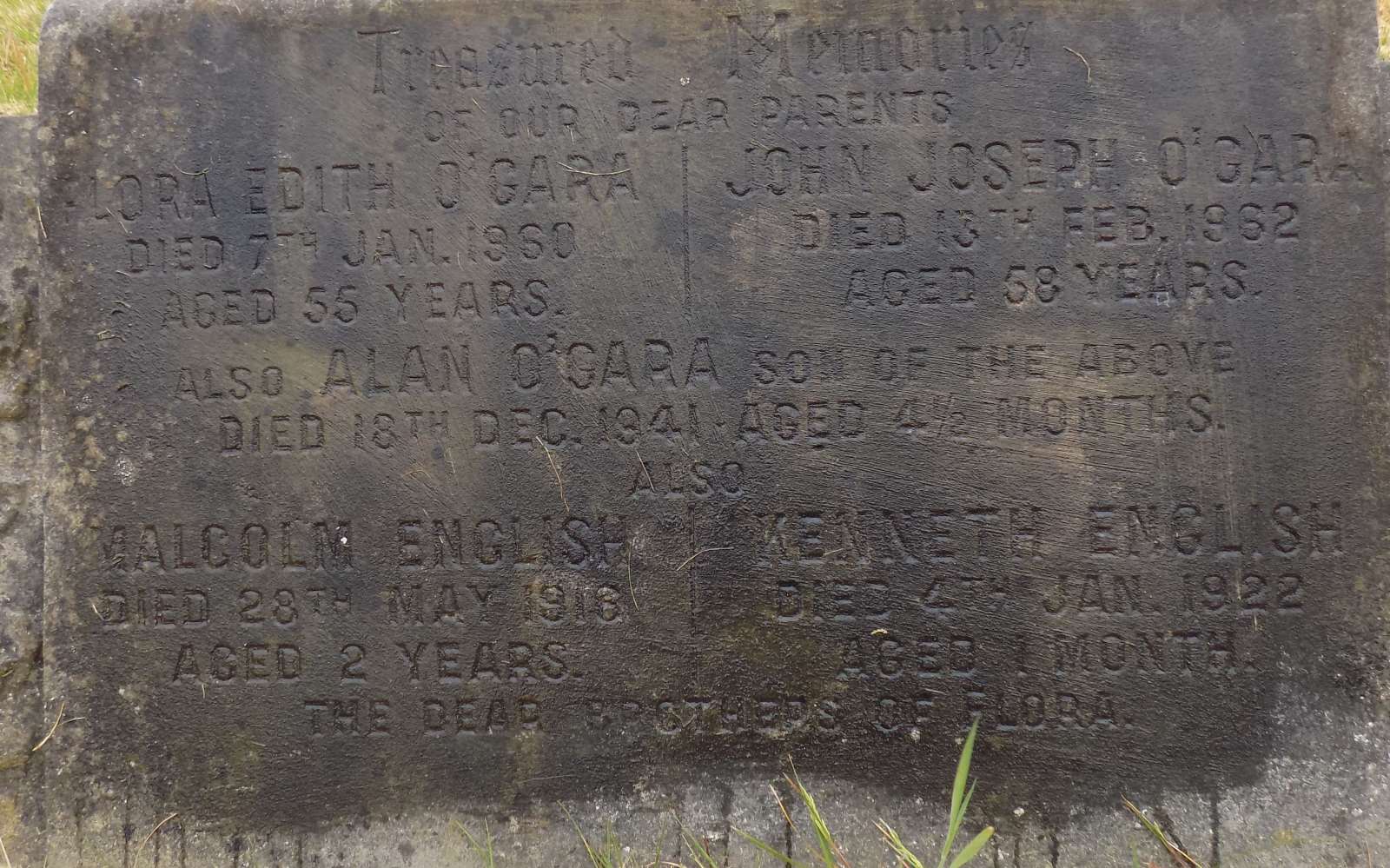
John Joseph O'Gara d 1962 a. 58
Parents
| Father | Patrick O'Gara (b. 1831) |
Family: Johanna Whelan (b. about 1872, d. about January 1940)
| Son | John Joseph O'Gara+ (b. 1904, d. 13 February 1962) |
| Son | Thomas Patrick O'Gara (b. 1 August 1905, d. 26 March 1952) |
Main Events
| User Reference Number | John Joseph (Jack) O'Gara; 24816 |
| Note | Witnesses were Michael O'Gara of 102 Hill Street and Delia Keegan of 55 Peel Street. |
| Birth | He was born about 1871. |
| Residence | He resided in 102 Hill Street in 1901. |
| Marriage | John Joseph (Jack) O'Gara and Johanna Whelan were married on 29 September 1901 in Our Lady of Mount Carmel RC Church, Toxteth Park, Liverpool, Our Lady of Mount Carmel is a Roman Catholic Church on High Park Street in The Dingle, Liverpool. The church was built when the parish population had outgrown the nearby Church of St Patrick on Park Place. Initially, from 1866, a chapel dedicated to Our Lady of Mount Carmel was used in the school. The church proper opened on 21 July 1878. In December 2009 the church and the adjoining presbytery gained Grade II listed status. |
| His son John Joseph O'Gara was born in 1904 in Toxteth, Liverpool. | |
| His son Thomas Patrick O'Gara was born on 1 August 1905 in Toxteth, Liverpool. | |
| Occupation | John Joseph (Jack) O'Gara was a joiner in 1911. |
| His wife Johanna Whelan died about January 1940 in Liverpool. | |
| Residence | He resided in 42 Belmont Road in 1946. |
| Burial | John Joseph (Jack)'s remains were buried on 12 November 1946 in Grave K443, Ford RC Cemetery, Liverpool. |
Census
| Label and Year | Manual |
|---|---|
| Census 1911 | John Joseph (Jack) O'Gara Id #17,047 (Principal) was at home on Census night 1911 at 123 Bresford Road, Liverpool; [[Principal Role]] [[Witness Role: Head of Household]] Original Documents, Source and Citations here |