A Snelson DataBase and Index
Includes the Snelson Coat of Arms & Armory
Person Page 428
 |  | 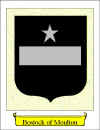 |  |
Mary Bostock
F, #10679, Deceased
Interactive Pedigree Button
Parents
| Father | George Bostock (d. 24 December 1627) |
| Mother | Dorothy Calveley (d. November 1678) |
Family: Thomas Williams (d. 1708)
| Son | Peter Williams |
| Son | Lancelot Williams (Alias Bostock) (d. December 1663) |
Main Events
| Also Known As | Mary Bostock was also known as Mary Williams. |
| Marriage | Mary Bostock and Thomas Williams were married.1 |
| User Reference Number | She; 8211 |
| Her father George Bostock died on 24 December 1627 in Holt, Denbighshire. | |
| Her mother Dorothy Calveley died in November 1678. | |
| Her husband Thomas Williams died in 1708. |
Citations
- [S611] Alfred Neobard PALMER, The Town of Holt & The Parish of Isycoed
Florence Snelson
F, #10682, Deceased, b. 1868, d. 1868
Interactive Pedigree Button
Parents
| Father | William Snelson (b. 1 November 1837, d. before 1881) |
| Mother | Mary Elizabeth Collins (b. about 1836, d. 13 April 1870) |
| Relationship | 1st cousin 2 times removed of Adrian John Snelson |
| Person References | Anne Davies c 1919 - Descendents of William Snelson c.1670 John Coventry c1875 - 1828 Ralph Dodd bef 1766 - Samuel Fairbrother c1755 - 1823 Sarah Davies 1721 - 1761 Thomas Crooks c1717 - aft 1757 Thomas Edwards c1645 - aft 1690 William Snelston bef 1668 - aft 1707 |
| Last Edited | 4 June 2025 |
Main Events
| User Reference Number | Florence Snelson; 23974 |
| Birth | She was born in 1868 was born <()> <()>. |
| Death | She died in 1868, at age ~0. |
| Residence | She resided in Liverpool in July 1868 Address: 70 Roscoe Street. |
| Baptism | She was baptised on 19 July 1868 in St Mark, Liverpool, Lancashire, Baptism records father as William Snelson, a joiner. |
| Burial | Florence's remains were buried on 3 August 1868 in Toxteth Park Cemetery, Liverpool, The burial entry says that the infant was 6 weeks old, so born circa mid June 1868. |
| Her mother Mary Elizabeth Collins died on 13 April 1870 in Liverpool. | |
| Her father William Snelson died before 1881. |
Nigel Egerton Snelson
M, #10685, Living
Interactive Pedigree Button
| Relationship | 3rd cousin 1 time removed of Adrian John Snelson |
Robert I Unknown1,2
M, #10690, Deceased, b. 1011, d. 18 March 1076
Interactive Pedigree Button
Parents
| Father | Robert II The Pious Unknown (b. 27 March 972, d. 20 July 1031) |
| Mother | Constance Unknown (b. 973, d. 25 July 1034) |
Family 1: Helie Unknown
Family 2: Ermengard (Blanche) Unknown (b. 1018, d. 18 March 1076)
| Daughter | Hildegard Unknown+ (b. 1050, d. 1104) |
Main Events
| User Reference Number | Robert I Unknown; 18711 |
| Residence | He resided Robert I Capet (1011 – March 21, 1076) was duke of Burgundy between 1032 to his death. Robert was son of King Robert II of France and brother of Henry I. In 1025, with the death of his eldest brother Hugh Magnus, he and Henry rebelled against their father and defeated him, forcing him back to Paris. In 1031, after the death of his father the king, Robert participated in a rebellion against his brother, in which he was supported by his mother, Queen Constance d'Arles. Peace was only achieved when Robert was given Burgundy (1032). Throughout his reign, he was little more than a robber baron who had no control over his own vassals, whose estates he often plundered, especially those of the Church. He seized the income of the diocese of Autun and the wine of the canons of Dijon. He burgled the abbey of St-Germain at Auxerre. In 1055, he repudiated his wife, Helie of Semur, and assassinated her brother Joceran and murdered her father, his father-in-law, Lord Dalmace I of Semur, with his own hands. In that same year, the bishop of Langres, Harduoin, refused to dedicate the church of Sennecy so as not 'to be exposed to the violence of the duke.' His first son, Hugh, died in battle at a young age and his second son, Henry, also predeceased him. He was succeeded by Henry's eldest son, his grandson, Hugh I. He married his first wife, Helie of Semur, about 1033, and repudiated her in 1055. Robert and Helie had five children: * Hugh (1034–1059), killed in battle * Henry (1035–ca.1074) * Robert (1040–1113), poisoned; married Violante of Sicily, daughter of Roger I of Sicily * Simon (1045–1087) * Constance (1046–1093), married Alfonso VI of Castile From his second wife, Ermengarde of Anjou, daughter of Fulk III of Anjou, he had one daughter: * Hildegard (c.1056–1104), married Duke William VIII of Aquitaine.1 |
| His wife Helie Unknown died. | |
| Birth | He was born in 1011.3,1 |
| His father Robert II The Pious Unknown died on 20 July 1031 in Melun, France. | |
| Marriage | Robert I Unknown and Helie Unknown were married about 1033.3,1 |
| His mother Constance Unknown died on 25 July 1034 in Melun, France. | |
| Marriage | Robert I Unknown and Ermengard (Blanche) Unknown were married in 1048.2,1 |
| His daughter Hildegard Unknown was born in 1050. | |
| Death | He died on 18 March 1076, at age ~65.2,1 |
| His wife Ermengard (Blanche) Unknown died on 18 March 1076. |
Citations
Robert de Caen1,2
M, #10699, Deceased, b. about 1090, d. 31 October 1147
Interactive Pedigree Button
Parents
| Father | Henry I Beauclerc Unknown (b. 1068, d. 2 December 1135) |
| Mother | Mistress Unknown |
Family: Maud (Mabel) Fitzhamon (b. about 1090, d. 1157)
| Daughter | Matilda (Maud) Unknown+ (b. about 1120, d. 29 July 1189) |
Main Events
| User Reference Number | Robert de Caen; 18586 |
| Residence | He resided See notes.1 |
| Note | Event Memos from GEDCOM Import... Residence Robert, 1st Earl of Gloucester (c. 1090 – October 31, 1147) was an illegitimate son of Henry I of England, and one of the dominant figures of the period of English history sometimes called the The Anarchy. He is also known as Robert of Caen, and Robert 'the Consul', though both names are used by later historians and have little contemporary justification, other than the fact that Robert's clerks made a practice of using the Latin word consul rather than the more common comes for his title of 'earl'. Robert was the eldest of Henry's many illegitimate children. He was born well before his father's accession to the English throne, probably in the late 1080s, as he had himself had a son by 1104. Although generally said to have been the son of Sybil Corbet, his mother is not known for certain. Recent scholarship (D. Crouch) suggests she was a member of the Gay or Gayt family, minor English nobility in Oxfordshire, one of whose members was called his cousin. Another suggestion (K. Thompson) is that his mother was a Norman woman who was connected to the Gays. William of Malmesbury refers to Robert's 'Norman, Flemish, and French' and not English ancestry, but this may be a reference only to his father's side of the family. Robert was acknowledged at birth, though in view of the vicissitudes of his father's career between 1087 and 1096 it is unlikely he was raised in his household. He was educated to a high standard, was literate in Latin and had a serious interest in both history and philosophy, which indicates that he was at least partly raised in a clerical household, a suggestion made all the more likely as his first known child, born around 1104, was born to a daughter of Bishop Samson of Worcester (died 1112) who up till 1096 had been a royal chaplain and treasurer of Bayeux. It may be significant that his next brother Richard was brought up in an episcopal household, that of Robert Bloet, bishop of Lincoln. Robert later received dedications from both Geoffrey of Monmouth and William of Malmesbury. William's 'Historia Novella' contains a flattering portrait of the Earl. Robert appears at court in Normandy in 1113, and around 1114 he married Mabel, eldest daughter and heir of Robert Fitzhamon, who brought him the substantial honour of Gloucester in England, Glamorgan in Wales and the honors of Sainte-Scholasse-sur-Sarthe and Évrecy in Normandy, as well as Creully. In 1121 or 1122 his father created him earl of Gloucester. Robert developed a role as one of his father's principal aides and captains. In 1119, he fought at the Battle of Bremule, and in 1123-24 he was one of the king's chief commanders during the Norman rebellion. Following the drowning of the king's only legitimate son, William Adelin, in 1120, Robert became increasingly caught up in his father's attempts to ensure the succession of the Empress Matilda, Robert's half-sister. It was to Robert's custody in his castle of Cardiff that his uncle, the deposed Duke Robert Curthose was eventually confided in 1126. On 1 January 1127 it was Robert who was one of the first to swear to accept Matilda as queen after Henry's death. His father at some point gave him the keeping of the castles of Dover and Canterbury, and thus control of Kent and the cross-Channel route. When King Henry fell mortally ill at Lyons-la-Forêt in Normandy on 25 November 1135, Earl Robert was at his side and was one of the magnates who swore to stay with the king's body until it was buried. The king died a week after falling ill, on 1 December 1135. After his father's death, Robert attended a series of conferences in Normandy and eventually accepted as king Theobald IV, count of Blois and King Henry's oldest nephew by his sister Adela. However, during the meeting with Theobald, news reach the Norman magnates that Theobald's younger brother, Stephen of Mortain and Boulogne, had been accepted and crowned as king in England. Robert eventually accepted this and at Easter 1136 attended the new king's ceremonial court. He does not seem to have seriously considered supporting the Empress Mathilda, and did not assist her invasion of southern Normandy. There is evidence in the contemporary source, the Gesta Stephani, that Robert was proposed by some as a candidate for the throne, but his illegitimacy ruled him out. Robert of Gloucester had other distractions in 1136 which put the succession question out of his mind. The Welsh magnates of south east Wales rose against the Anglo-Norman settlers in April and Robert spent much of the year stabilising the situation. He reached peace treaties with the Welsh and recognised the gains of Morgan ab Owain (died 1158), who called himself king of Glamorgan. In England, Robert of Gloucester soon became disenchanted with King Stephen, and by the end of 1137 had withdrawn from his court. It is clear that he was disgruntled that he did not occupy the central place in politics that he had in the last reign. He was also alarmed at the favour with which the king regarded his Flemish mercenary general, William of Ypres, and the rising power of the Beaumont twins, Waleran, count of Meulan and Robert, earl of Leicester. In 1138, Robert declared his support for Matilda. Unfortunately he was defeated in Normandy by Waleran of Meulan and his English allies were crushed by Stephen and driven back on his fortress of Bristol. Earl Robert took a great gamble and sailed for England with his half-sister, the Empress, his wife and a company of knights. They landed at Arundel on 30 September 1139, and were welcomed into the castle there, the possession of Queen Adeliza, Matilda's stepmother. Robert left for Bristol immediately. In his absence the castle was blockaded by King Stephen, opening the possibility that he might seize his dynastic rival. The king in the end let the empress and countess depart under escort to Bristol. With Earl Robert and the Empress in England and based in the west country and Severn Valley, the civil war had begun. The earl's first moves are revealing. He commanded raids against Wareham in Dorset and Worcester. Both were possessions of the Beaumonts. He took Robert of Leicester's lands in Dorset for his own. He did much the same to other royalists within his area, mass deprivations which were at the heart of what is called the Anarchy. Although secure in a heartland of support, Earl Robert did not find it easy to recruit wider support and break out. The king succeeded in containing him along the line of the Cotswold Hills, with such effect that both sides were willing to send representatives to a peace conference held at Bath in August 1140, though nothing came of it. Earl Robert's big opportunity came at Christmas 1140, when King Stephen fell out with Earl Ranulf II of Chester. Ranulf's failed negotiations with the king to secure Lincoln Castle led him to ally with Robert, his father-in-law. They united their forces at Castle Donington in January 1141, including a host of Welsh mercenaries allied to Earl Robert. On 2 February 1141 the earls met and defeated King Stephen at the Battle of Lincoln. With the king captive, Empress Matilda should have secured the throne, but a combination of stubborn royalist support, the empress's miscalculation and military misjudgement led to her failure. On 14 September 1141 Earl Robert and the Empress were trapped by a royalist army in an ill-judged attempt to seize control of Winchester. Earl Robert was captured fighting a rearguard action at the river crossing of Stockbridge to allow his sister to escape. Earl Robert was imprisoned for two months at Rochester Castle before he was released in an exchange with King Stephen. The cross-over point in the joint release was on 1 November 1141 at Winchester, where the two men had a chance to exchange friendly remarks, and the earl apparently assured the king that there was nothing personal in the fight as far as he was concerned. The war continued and it rapidly became evident that it was a stalemate. The Empress's husband refused to commit the resources to tip the balance in England, only agreeing to discuss matters with the earl. In June 1142 Robert crossed from Wareham to Normandy and stayed there till the end of October. He came back with no reinforcements, but with his nephew Henry, the son of the Empress. In the meantime the Empress had been trapped in Oxford. Nothing could be done to release her, and she had to manage her own escape from the castle. Robert continued the struggle but with less and less hope of ultimate victory. The king also had limited resources, but managed slowly to push towards Robert's centres of Bristol and Gloucester. At the end of 1145 Philip, Earl Robert's son and military captain, defected to Stephen, taking with him the strategic castles of Cricklade and Cirencester. With Gloucester and Bristol under threat, the earl opened negotiations in the autumn of 1146. The pressure continued in 1147, and it was in a desperate attack on Farnham in the late summer of that year that Earl Robert fought his last unsuccessful action of the war. He retired to Bristol to gather new forces, but became feverish. He died on 31 October 1147 and was buried in the priory of St James he had founded outside the castle. He married, around 1114, Mabel of Gloucester (died 1156), daughter of Robert Fitzhamon and Sibyl de Montgomery. Their children were: * William Fitz Robert, 2nd Earl of Gloucester, died 1183. He married Hawise (died 1197) daughter of Robert II, earl of Leicester. * Roger, Bishop of Worcester, (died 9 August 1179, Tours). * Hamon, killed at the siege of Toulouse in 1159. * Robert. (died before 1157) Also called Robert of Ilchester in documents. He married Hawise, (died after 1210) daughter of Baldwin de Redvers and Adeliz. Their daughter Mabel married Jordan de Cambernon. * Matilda, (died 1189), wife of Ranulph de Gernon, 2nd Earl of Chester. * Philip, Castellan of Cricklade, (died after 1147). He took part in the Second Crusade. Earl Robert had an illegitimate son, Richard, bishop of Bayeux (1135-1142), by Isabel de Douvres, sister of Richard de Douvres, bishop of Bayeux (1107-1133). |
| Birth | He was born about 1090 in Caen, Basse-Normandie, France.3,1 |
| Marriage | Robert de Caen and Maud (Mabel) Fitzhamon were married about 1114 in England.2,1 |
| His daughter Matilda (Maud) Unknown was born about 1120 in Gloucestershire, England. | |
| His father Henry I Beauclerc Unknown died on 2 December 1135 in St Denis-le-Fremont, Fance. | |
| Death | Robert de Caen died on 31 October 1147, at age ~57, in Bristol, Gloucestershire, England.2,1 |
| Burial | Robert's remains were buried in Priory of St James, Bristol.1 |
| His wife Maud (Mabel) Fitzhamon died in 1157 in Bristol, Gloucestershire, England. |
Citations
Lilian J Stevenson
F, #10700, Living
Interactive Pedigree Button
Family: Hubert Allen Benyon (b. 26 June 1915, d. 1997)
| Relationship | Partner of Hubert Allen Benyon (2nd cousin 1 time removed of Adrian John Snelson) |